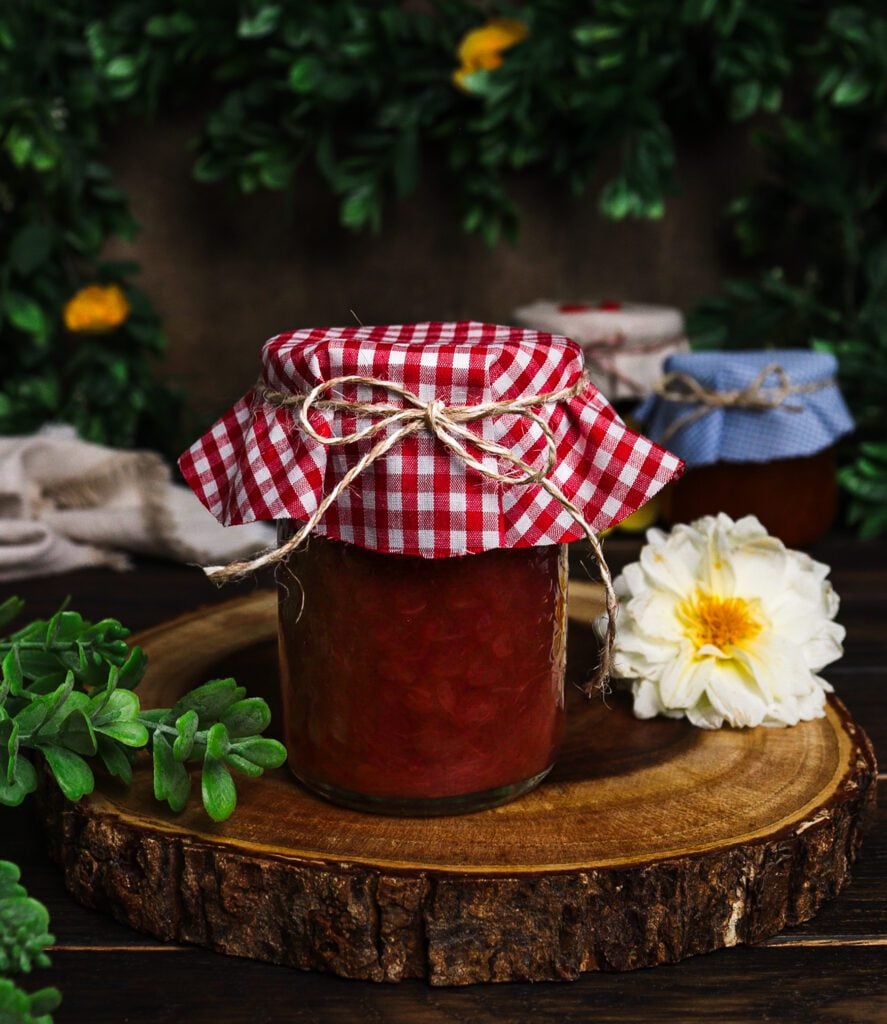
This sweet and tangy rhubarb shallot relish is a perfect way to preserve the first flavours of spring in true hobbit style! For more hobbit-inspired preserves and pantry recipes, our A Hobbit’s Pantry e-cookbook is a compilation of many of our past Shire favourites to stock your shelves all year round.
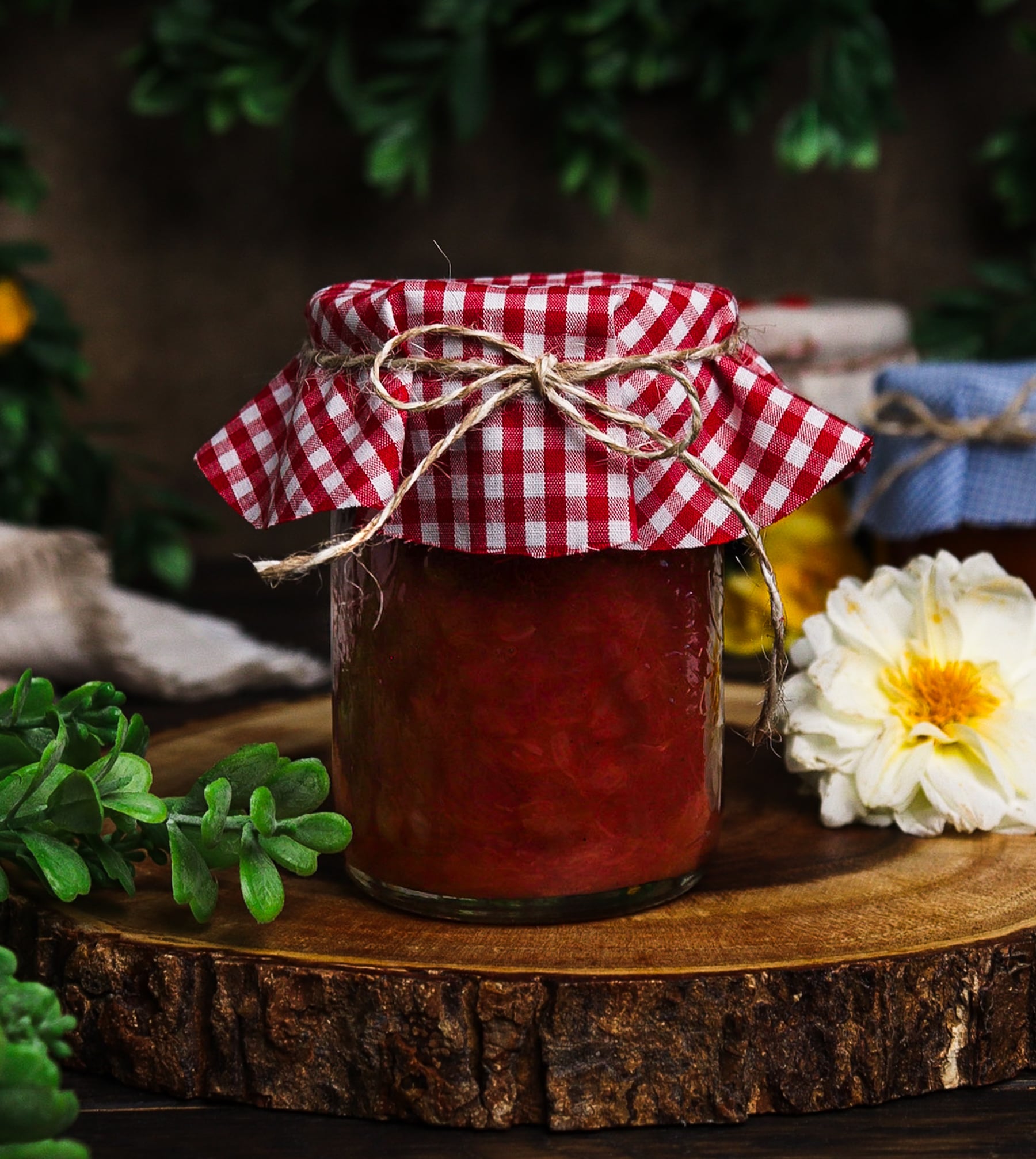
At a Glance: Rhubarb Shallot Relish
- Prep Time: 30 minutes
- Cooking Time: 20 minutes
- Canning Time: 15 minute
- Water Bathing Time: 10 minutes
- Total Time: ~1 hour 15 minutes
- Servings: 4 pints
- Flavour: Sweet and tangy, pungent oniony flavour, hint of spice
- Skill Level: Intermediate
- Why this Works: This fresh and zesty rhubarb shallot relish is a delicious savoury preserve that’s perfect for using up your early spring crop of rhubarb.
The Pantries of Middle Earth
When spring arrives in Middle Earth, the fields, orchards and gardens begin to yield their bounty. From the blooming gardens of the elves to the lush hedgerows of the Shire, from the root cellars of the dwarves to the scavenged stores of the orcs, the ripe harvest is ready for preservation. In the flowering orchards of Gondor and windswept fields of Rohan, the peoples of Middle Earth busy themselves with preserving the harvest. Step into the well-stocked pantries of Middle Earth to sample the plentiful stores and carefully preserved goods to enjoy the bounty of spring and summer all year round.
A Hobbit’s Pantry
During the lean months of spring, there is precious little by way of fresh produce in the Shire. Fresh rhubarb is one of the first crops of the season and almost certain to be a hobbit favourite for turning into jams and preserves, like our spiced rhubarb jam. For a savoury alternative, we have combined rhubarb with fresh shallots and warm spices for a sweet and tangy rhubarb shallot relish. With its oniony bite, this piquant relish is delicious served with cheese, such as our whipped goat cheese crostini, on a charcuterie platter with crackers, or with our savoury oatcakes. It is also perfect to serve as a condiment alongside roast meat such as our rosemary dijon pork tenderloin or mead glazed ham. Savour the flavours of spring in the Shire with a jar of this sweet and tangy relish.

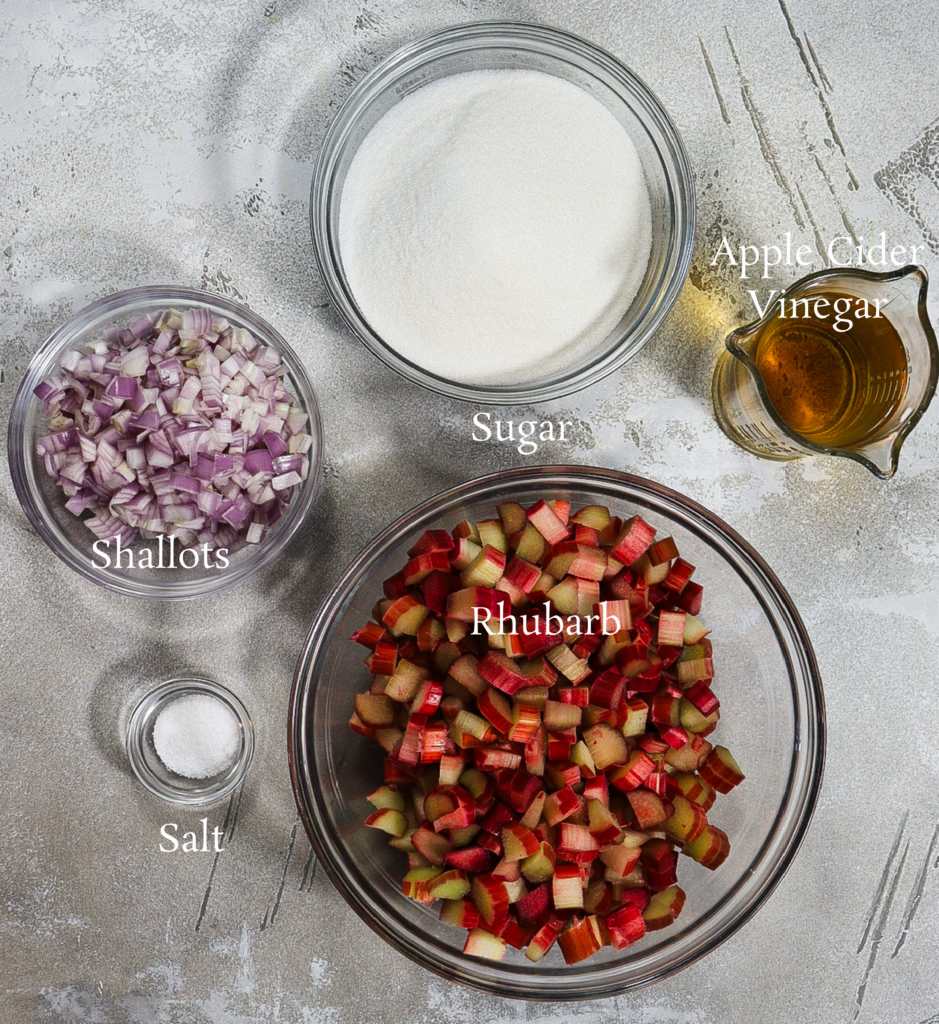
Ingredients for Rhubarb Shallot Relish
Rhubarb: I typically make this relish using fresh rhubarb, however, in a pinch you could use frozen. If using frozen rhubarb, you may need to chop them into smaller pieces. Allow the frozen rhubarb to sit at room temperature for about 15 minutes to take the chill off then carefully chop into a small dice.
Shallots: Finely diced shallots add a punch of oniony flavour to the relish.
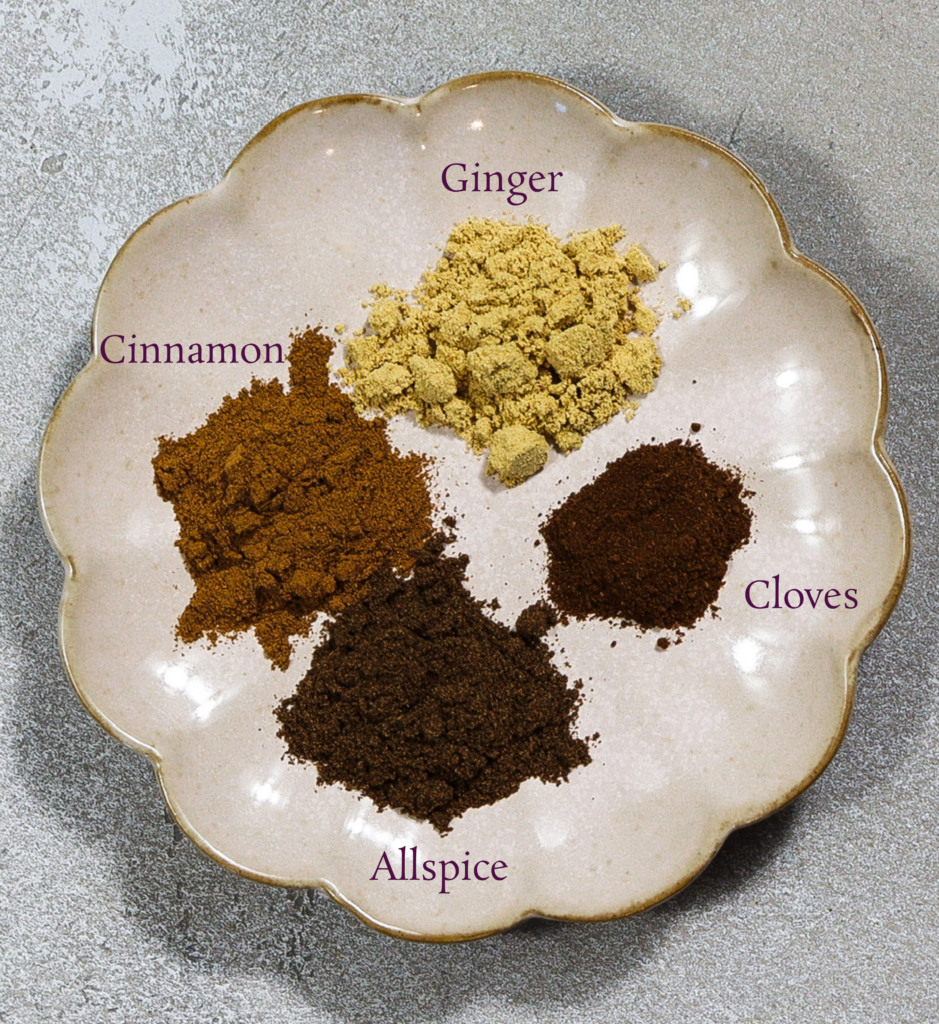
Spices: A blend of dried spices adds warmth to this zesty and piquant relish.
Sugar: Like most preserves, this relish uses a fair amount of sugar which is balanced by the acidity from the vinegar. I used granulated sugar in this recipe, although you could use brown sugar instead.
Vinegar: To balance the sweetness in this relish, I use apple cider vinegar. I like the fruitiness that apple cider vinegar brings to the dish.
Canning Equipment
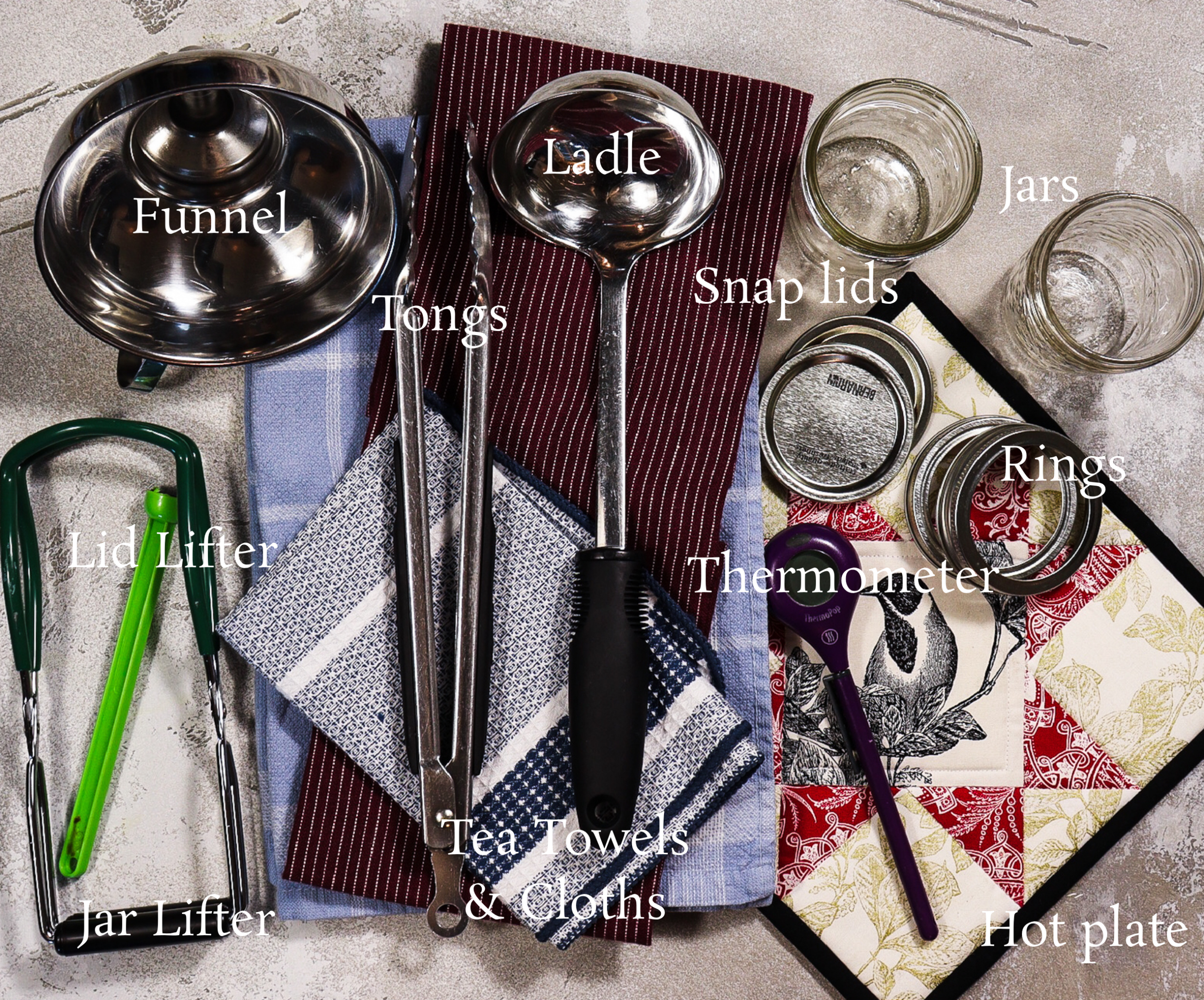
Home canning requires some specific tools and equipment to ensure food safety and quality. Here is a list of some equipment you well need in order to home can as well as a few optional tools that aren’t strictly necessary but nice to have anyway. It is important that all tools used are clean before you start to avoid contamination.
- Clean towels and cloths – Have a couple of clean tea towels and cloths ready to go before you being canning. You will want one towel to spread out on the counter where you fill the jars as well another towel to dry off the sterilized lids. You will need two cloths: one dry and one damp. The damp cloth will be used to clean the rim of the jar before adding the lid and the dry one to hold the hot jar while sealing the top.
- Hotplate – Keep a hotplate or rack near your canning station for the hot pot. You should be canning your product while hot so you will need the pot nearby when you’re ready to fill the jars.
- Funnel and ladle – A funnel will make it so much easier to fill the jars. It’s important to keep the rim of the jars clean to ensure a perfect seal. A funnel will help prevent spills and keep the rim clean as you ladle the filling into the jars.
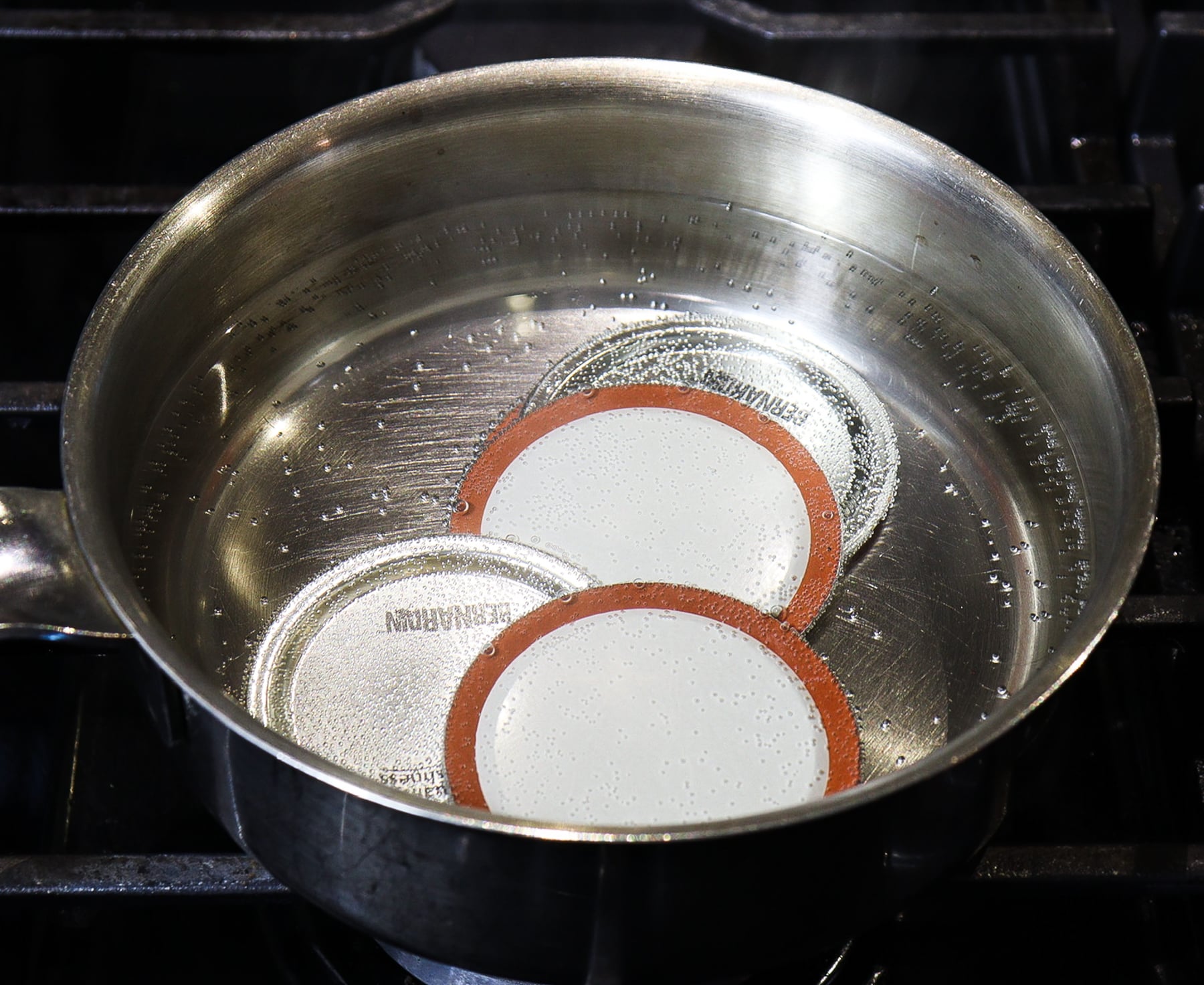
- Jars, rings, and lids – All jars and lids need to be sterilized before canning. I like to sterilize one or two jars and lids than is called for in the recipe. You won’t have the time to sterilize more if you end up with more filling than jars. While the jars and rings can be reused, you will need to use new snap lids each time you can to ensure they seal properly, unless you have ones that are labelled reusable. To sterilize the jars, wash the jars and then place on a baking sheet in a 250°F oven for at least 15 to 20 minutes. To sterilize the snap lids, place them in a small saucepan of water over medium heat. Allow the water to get hot, just below a simmer, but do not boil or it could damage the rubber seal.
- Water bath canner – For most home canning items you will need to use a water bath canner. This large pot includes a rack used to lower the jars into boiling water. Some items, such as high sugar jams and jellies can be canned without use of a water bath if the temperature is kept very hot throughout the canning process. However, water bathing will add an extra layer of protection and safety if you are concerned about canning safely.
- Jar lifter and magnetic lid lifter – A jar lifter will make removing hot jars from the water bath much easier so it’s good to have if possible. A magnetic lid lifter is convenient to have to lift the snap lids from the hot water, although it isn’t strictly necessary; you could use tongs instead.
- Thermometer – An instant read thermometer will help ensure that you reach the correct temperature while cooking your product. If you plan on doing a lot of canning, then there are specific spatulas that you can buy which include a built in thermometer. That way you can keep an eye on the temperature while stirring.
How to Make Rhubarb Shallot Relish
1. Gather the canning equipment
The first step in making preserves is to gather your equipment and sterilize the jars. Fill a water bath canner half way with water. Remove the rack and set aside. Place the canner over medium high heat and bring to a simmer. Fill a kettle with water and bring to a boil – you may need more hot water to add to the canner once you’ve added the jars.
Preheat the oven to 250°F. Make sure the jars are clean. Then place the jars on a baking sheet in the oven for at least 15 to 20 minutes. Add the canning lids to a small saucepan with water and place over low heat in barely simmering water. Gather together clean tea towels, both a damp and dry cloth, a ladle, tongs, funnel, and thermometer and have ready to go. Have a potholder ready for the hot pot. If using, gather your jar lifter and magnetic lid lifter.
2. Prep the ingredients
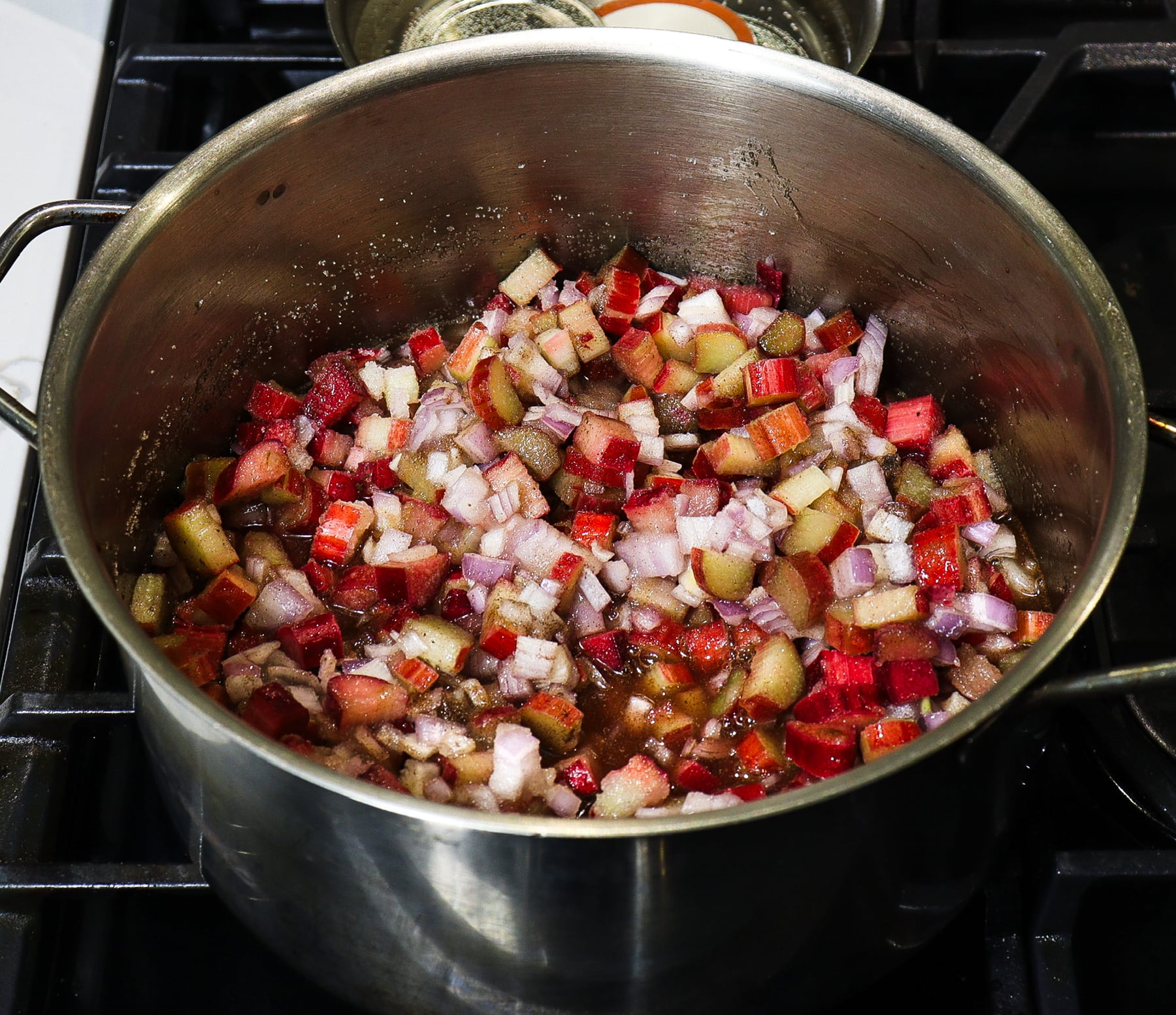
Wash and chop the rhubarb into a small dice. Peel and finely dice the shallots. Transfer the rhubarb and shallots to a large pot. Add the sugar, apple cider vinegar, kosher salt, and spices.
3. Cook the relish
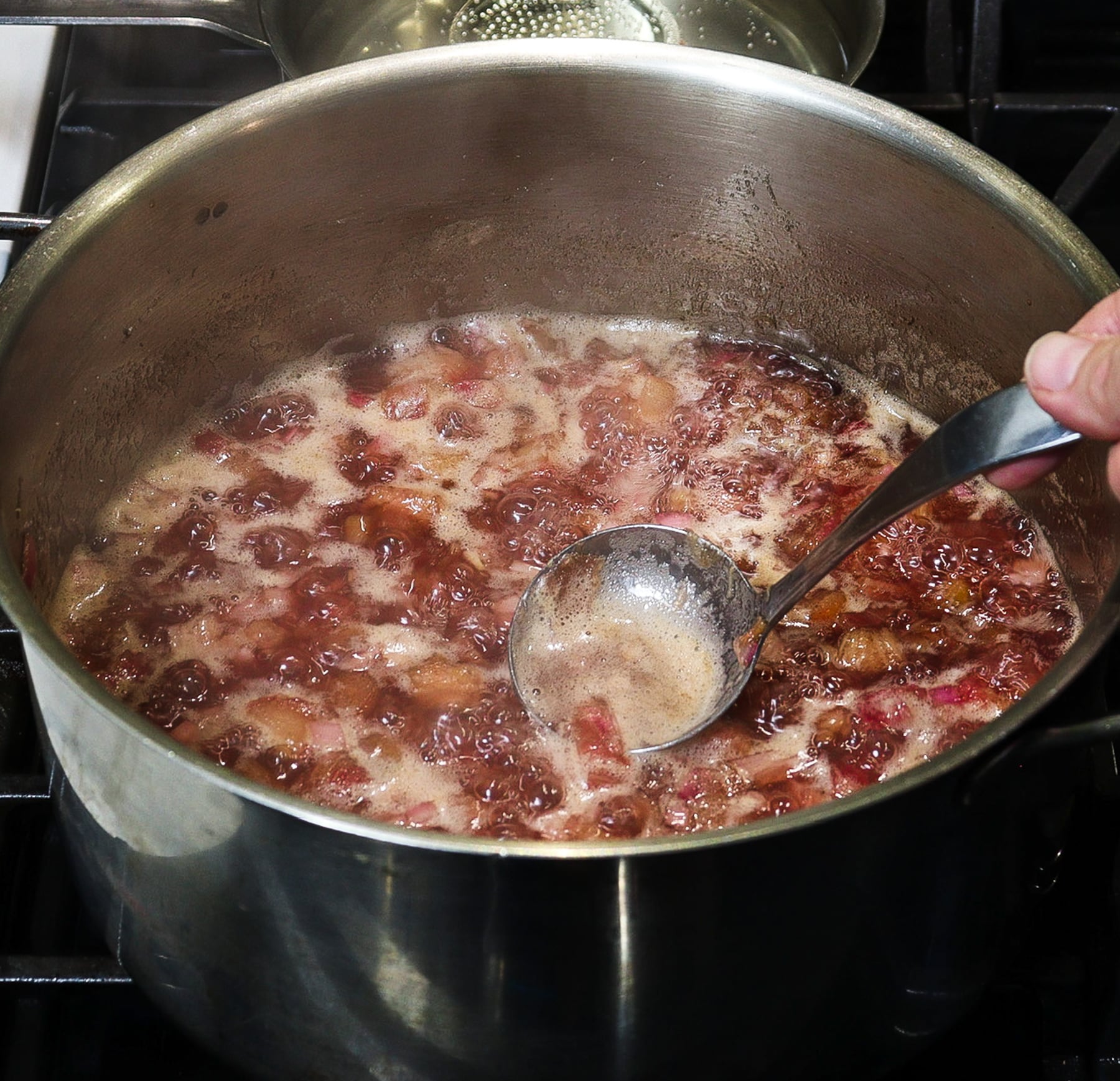
Place the pot over medium high heat and bring to a boil, stirring constantly. Optionally, add a teaspoon of butter to help prevent the relish from foaming. Maintain the boil, adjusting the temperature to prevent the relish from boiling over. Skim periodically to remove any excess foam. The relish will be fairly runny at this point but should thicken over time.
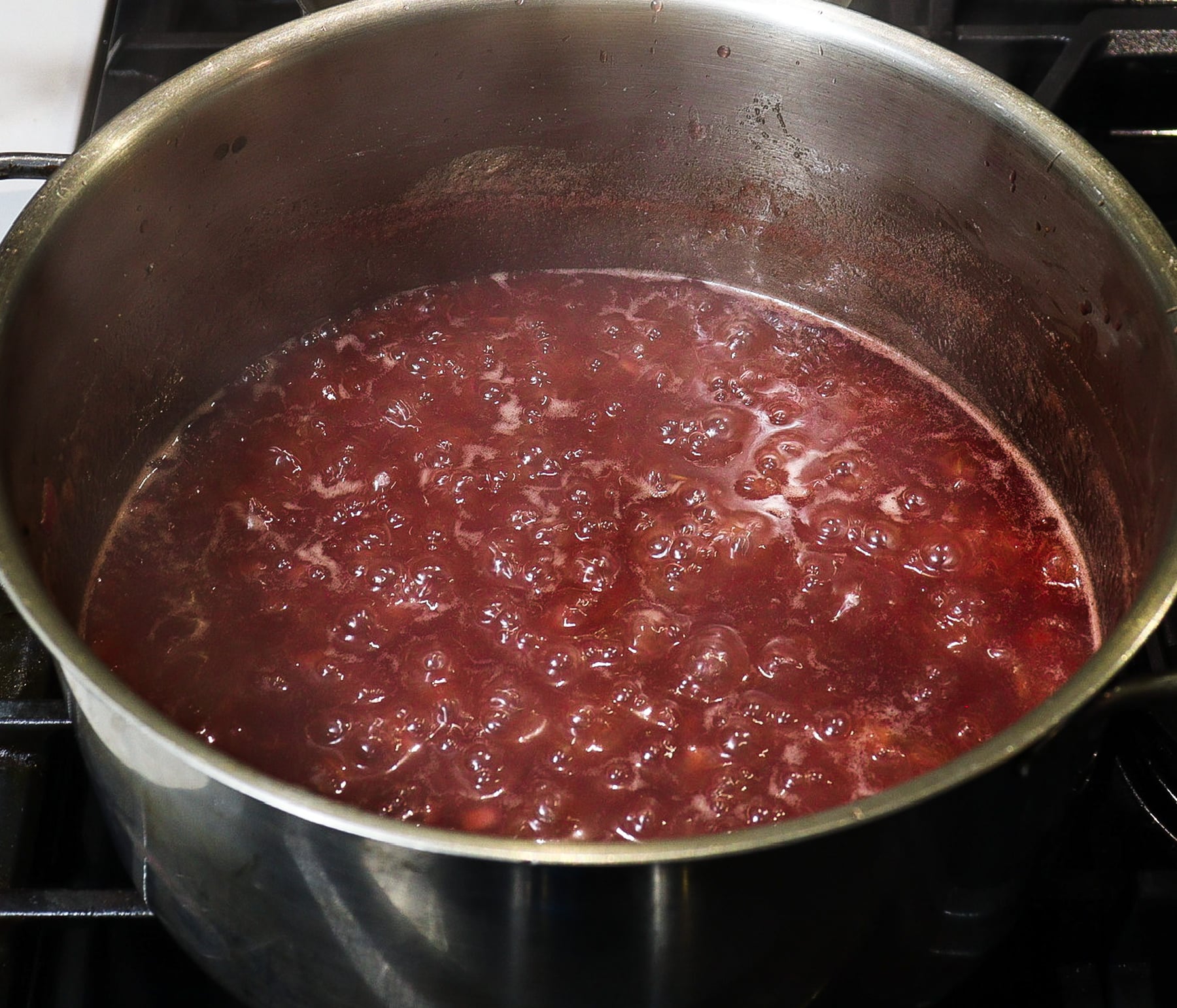
Continue to boil the relish, stirring constantly until it reaches a temperature of 212°F and has thickened. This will take from 15 to 20 minutes.
4. Can the relish
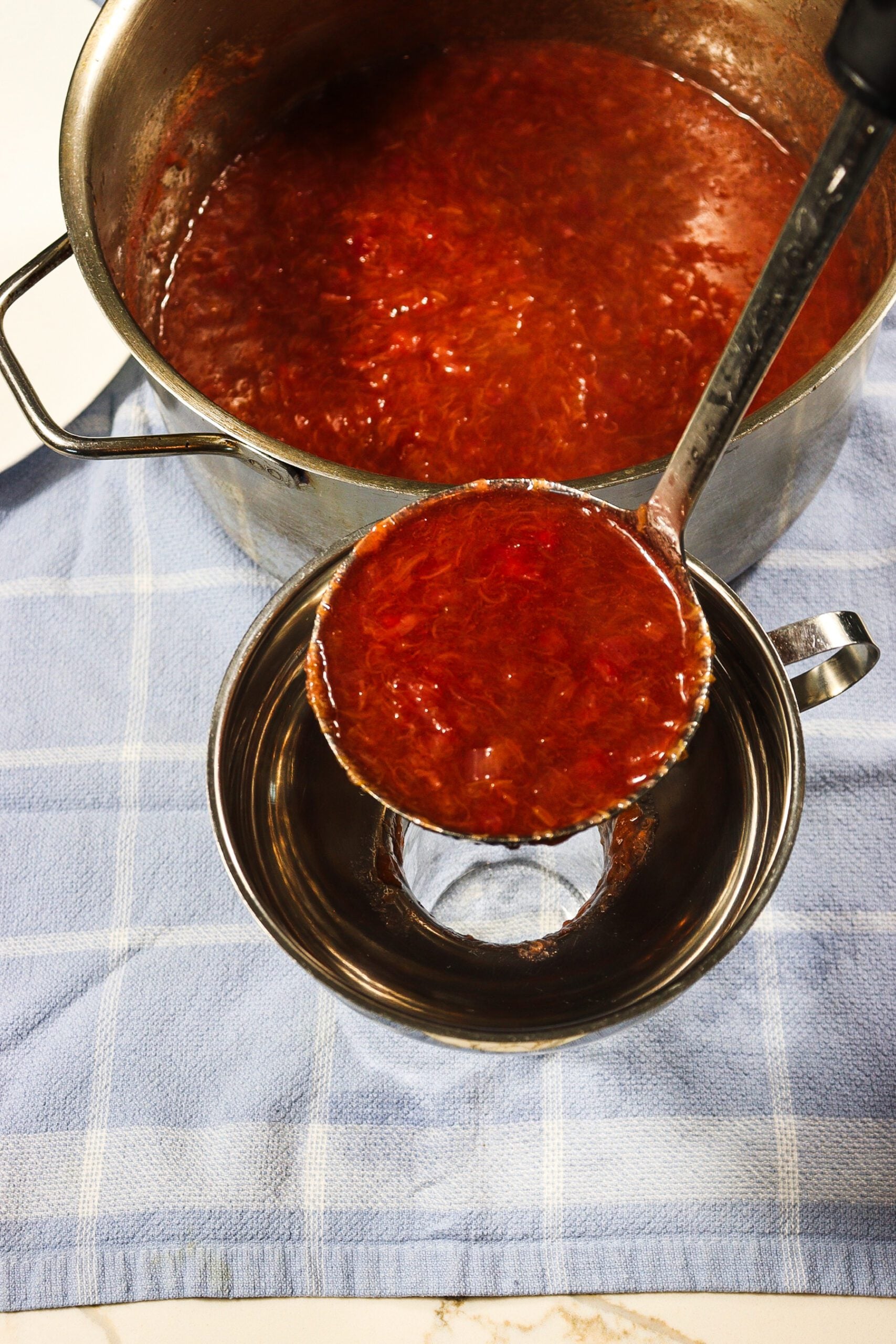
Transfer the pot to the potholder on the counter. Use tongs to remove a jar from the oven and place on a tea towel. Use the funnel and ladle to fill the jar with the hot relish, leaving a half inch space from the top.
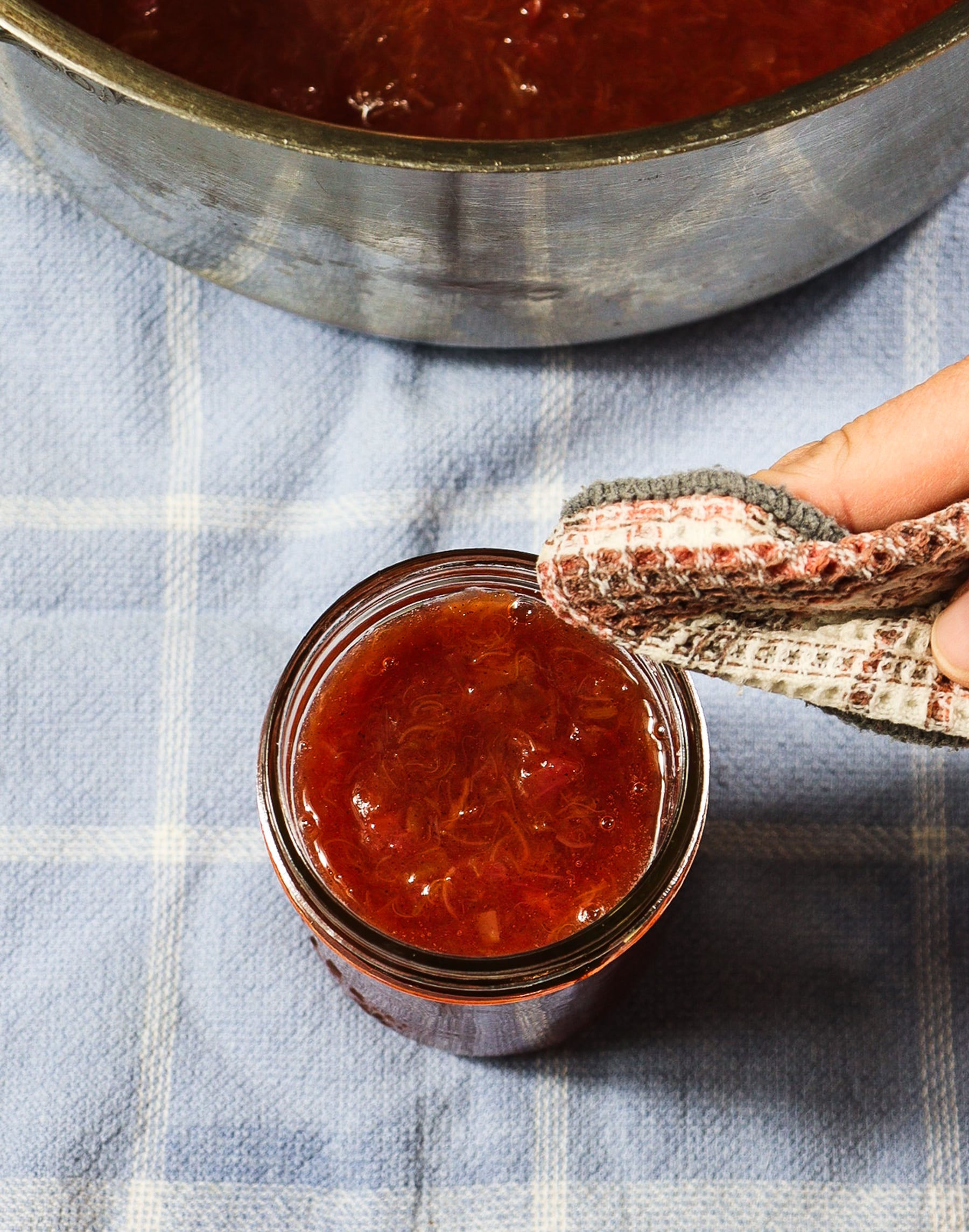
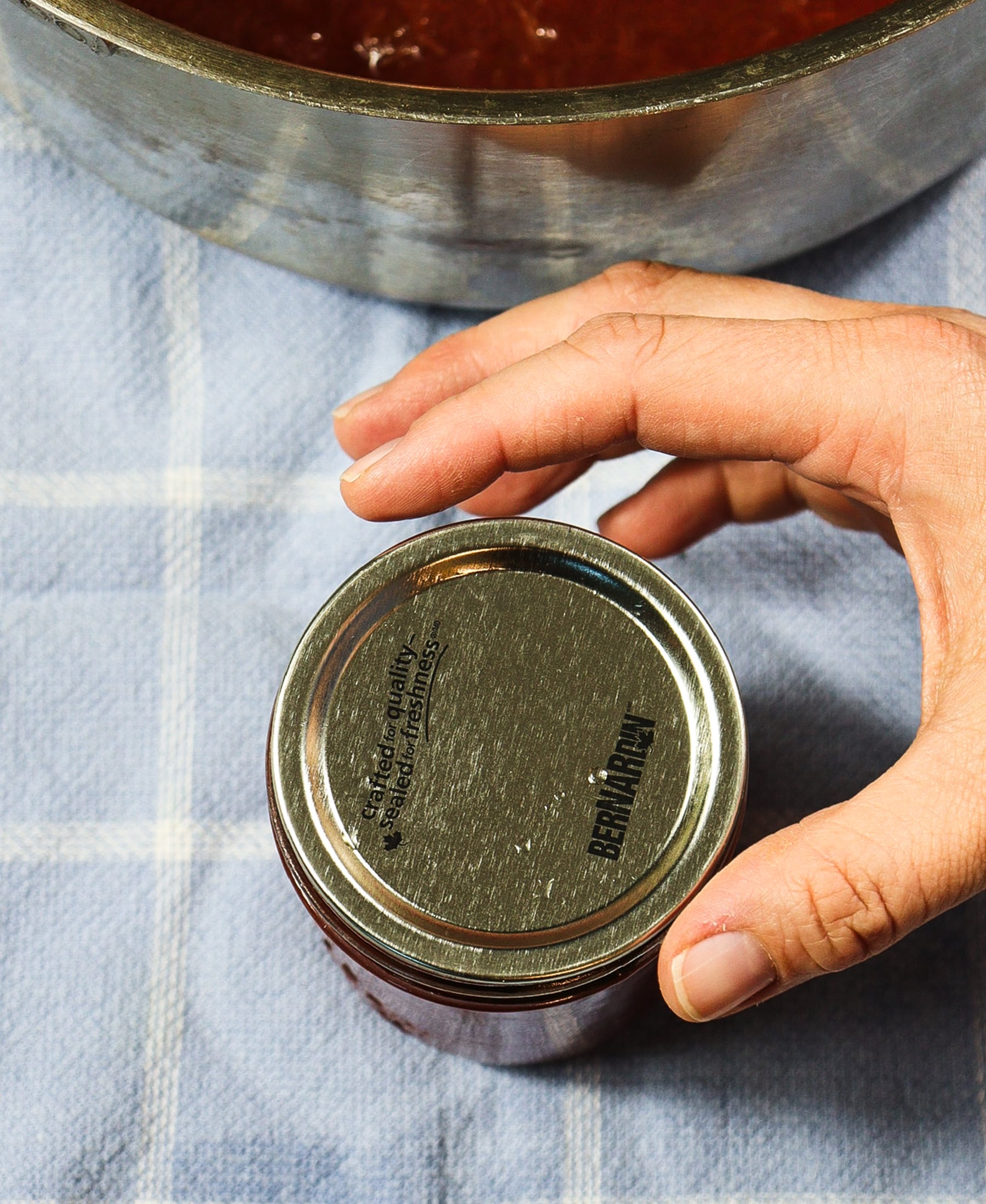
Use the damp cloth to wipe the rim of the jar to clean any spills. Use the magnetic lid lifter to remove one of the snap lids from the hot water and wipe dry with a clean tea towel. Place the snap lid on the jar. Hold the jar with the dry cloth and firmly screw on the ring lid. Set the jar aside being sure not to press down on the top of the lid – this could give the false impression that the jar has sealed when it hasn’t. Repeat with the remaining relish.
5. Water bath the relish
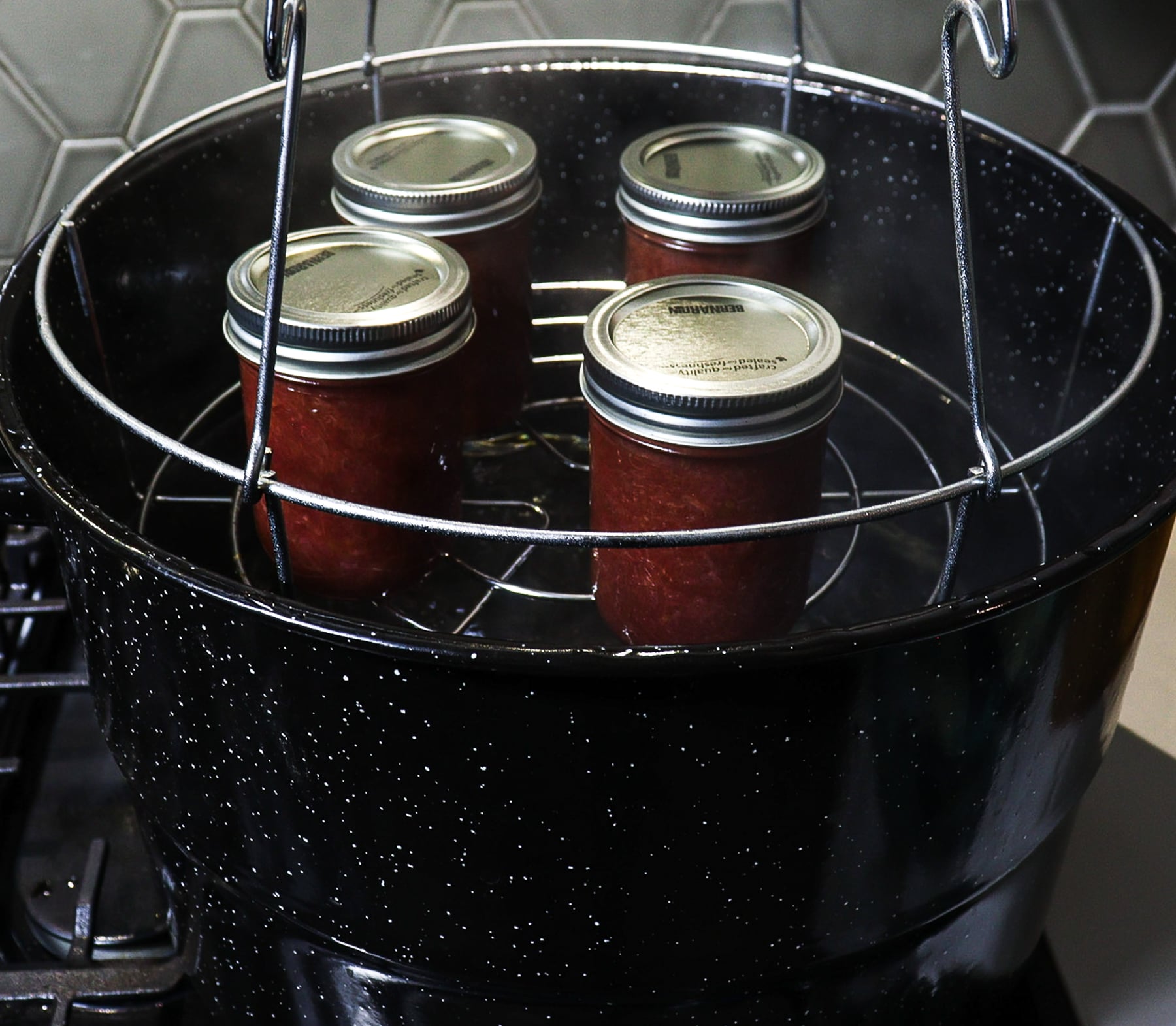
Arrange the sealed jars on the rack. Gently lower the rack into the canner, dipping it a few times in the hot water to temper the jars before lowering the rack completely into the canner. Make sure the water completely covers the jars by at least an inch or two. Add more boiling water from the kettle if needed. Cover the canner and bring to a rolling boil. Once the water comes to a full boil, begin the timer for 10 minutes.
After 10 minutes, carefully lift the rack out of the water and hook over the edge of the canner. Use a jar lifter to remove the jars. Carefully tip any water off the lids, making sure not to press down on the lids and create a false seal if they haven’t sealed during the water bath. The jars should seal within a few hours after the water bath.
6. Serve the Rhubarb Shallot Relish
A properly sealed jar will make a small popping sound as the lid seals and the top will go from looking rounded to indented. Any jar that hasn’t sealed can be stored in the fridge and used within a few weeks. Sealed jars can be labelled and stored in the pantry for at least a year. When opening the jar, check that it is still sealed and for any signs of mold or spoiling, discarding if you notice any spoilage. Enjoy!
More Pantry Recipes from Middle Earth
- Chive Blossom Butter
- Spiced Rhubarb Jam
- Raspberry Lavender Jelly
- Pickled Mustard Seeds
- Wild Mushroom Seasoning Salt
- Spiced Apple Butter