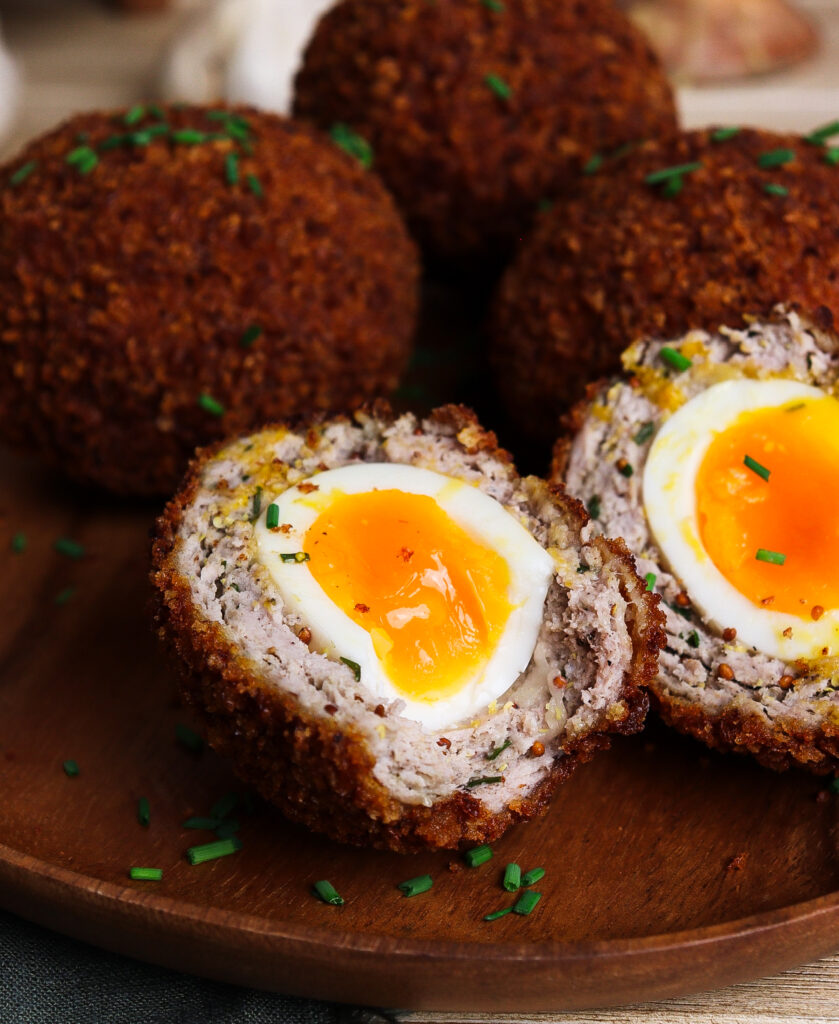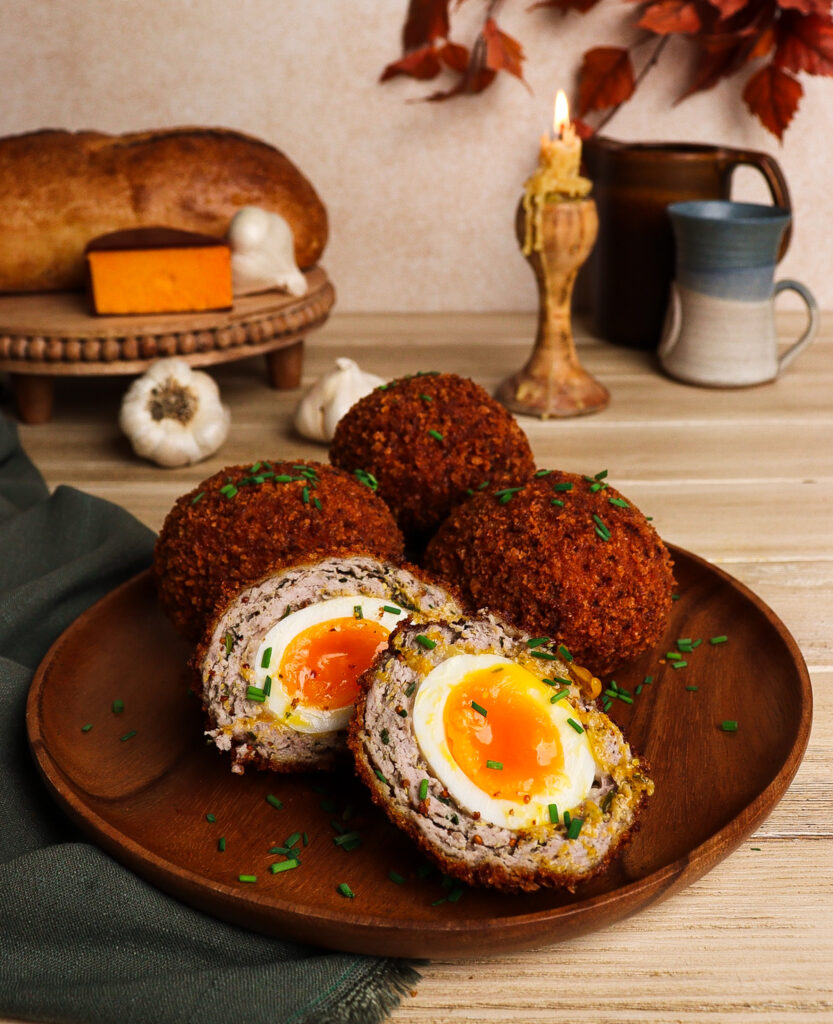
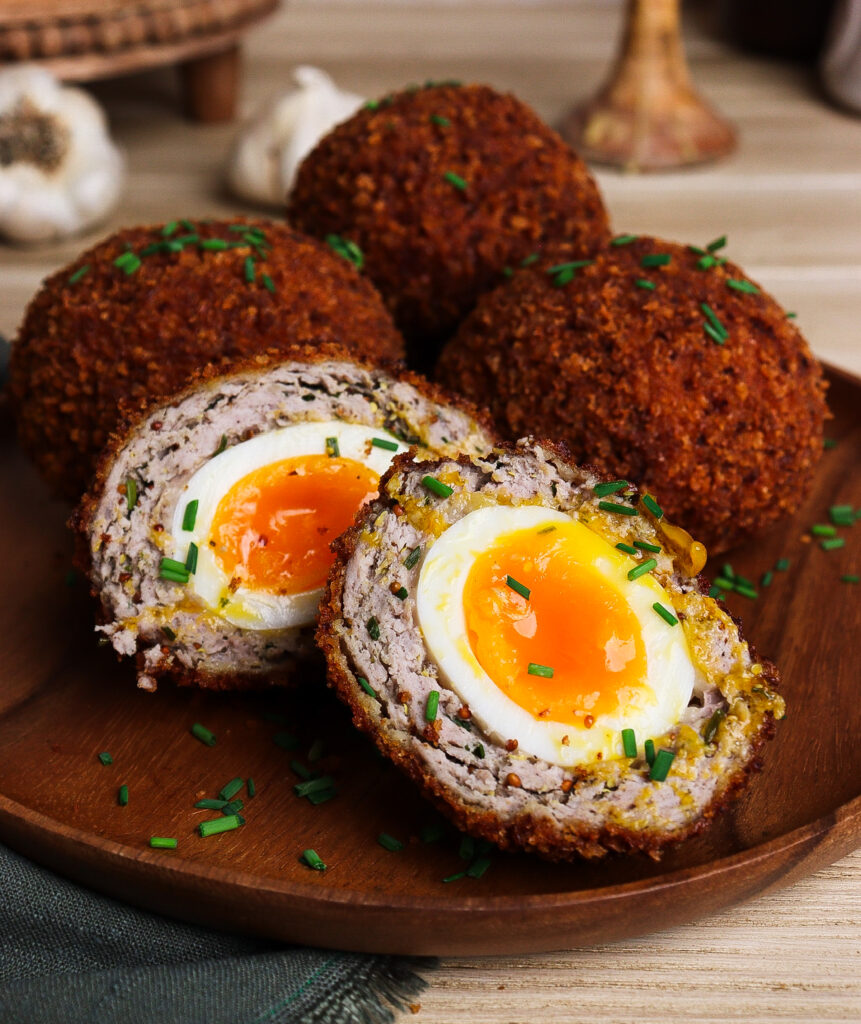
Scotch eggs, wrapped in seasoned pork and fried to a golden crisp, are a humble yet satisfying treat for hungry hobbits and wandering wizards alike.
An Unexpected Feast
Bilbo Baggins’ world is turned upside down one ordinary morning when he is visited after breakfast by the wandering wizard Gandalf. Despite having fond childhood memories of the wizard, Bilbo is uncomfortable during the meeting, particularly at the suggestion of an adventure. A hasty invitation to tea, meant to send Gandalf on his way, has the unexpected consequence of sending Bilbo on the first of many life changing adventures.
The following day Gandalf keeps his appointment and brings with him a company of 13 dwarves. As the dwarves descend upon Bag End, one by one, they begin to call out their food orders. From drinks to savouries to sweets, Gandalf, Thorin, and company prove to have voracious and hearty appetites. Luckily for the dwarves, Bilbo’s pantry is well-stocked and their unexpected feast turns out to be quite the lavish and indulgent feast!
Scotch eggs
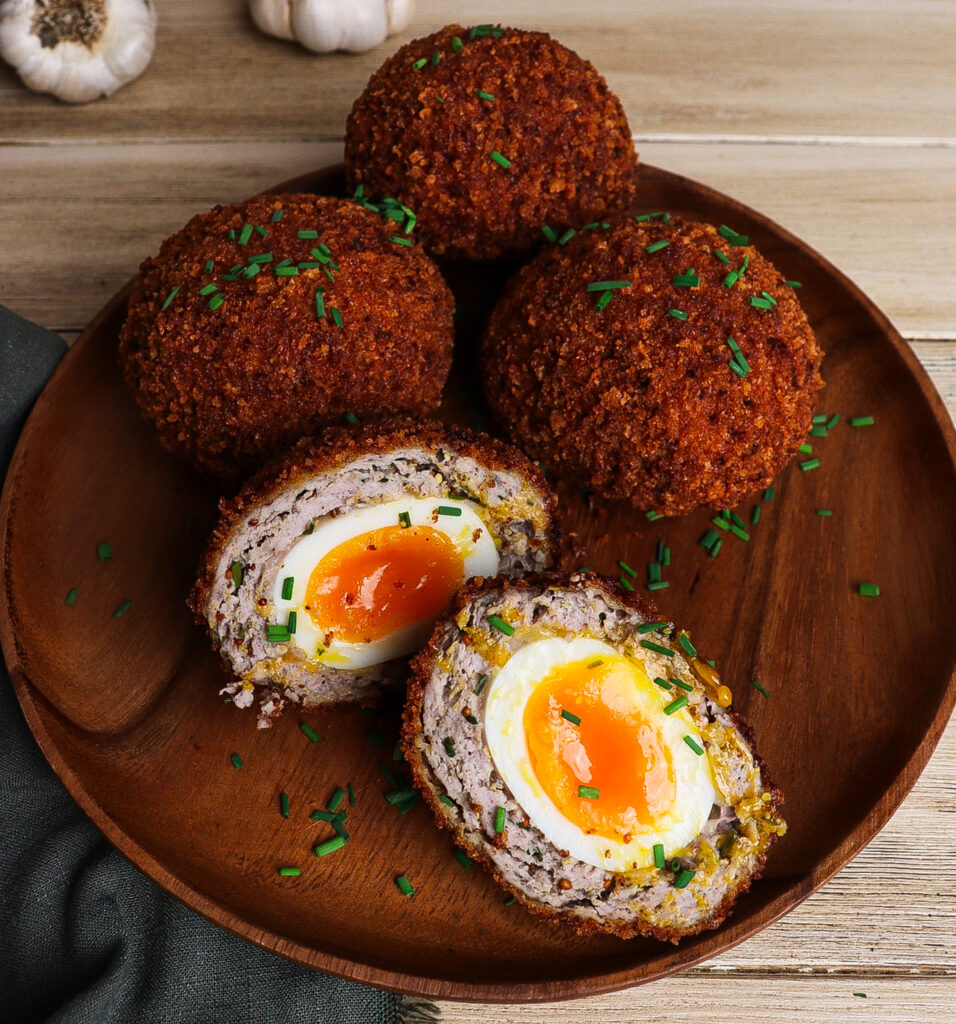
As the dwarves put in their food orders, Gandalf requests “a few eggs”. Although Gandalf was almost certainly asking for plain boiled eggs, classic Scotch eggs with their pork and crispy breadcumb coating are a much more interesting snack. The eggs are either soft or hard boiled, depending on preference, before being wrapped in seasoned ground pork. A double coating of breadcrumbs adds a crunchy coating to this traditional British snack. Served either warm or cold, Gandalf would certainly approve these savoury Scotch eggs.
“Put on a few eggs, there’s a good fellow!” Gandalf called after him, as the hobbit stumped off to the pantries.
-The Hobbit by JRR Tolkien (Chapter 1: An Unexpected Party)
Ingredients
Ground pork: A lot of recipes for Scotch eggs call for sausage meat; however, unless you have access to good quality sausage meat, this can result in an inconsistent final product. Using seasoned ground pork ensures that the flavour will be consistent each time you make it.
Eggs: The boiled egg inside a Scotch egg can be cooked to your preference. I prefer a slightly runny yolk but can hard boil it if you prefer. For a soft boiled egg, cook the eggs in boiling water for 4 1/2 minutes while hard boiled will take up to 10 minutes.
Panko crumbs: You can use either panko or regular breadcrumbs to coat these eggs. I prefer the panko, which yields a crispier crust.
How to Make Scotch Eggs
Boil the eggs
Fill a large saucepan with water and bring to a boil. Add a splash of vinegar. If the eggs are cold, place them in a container with warm water to bring them up to room temperature. Cold eggs will drop the temperature of the water and make the cooking times inaccurate.
Add six of the eggs to the boiling water and set a timer for 4 1/2 minutes for soft boiled eggs. When the timer goes off, remove the pot from the heat and drain the water. Place the pot in the sink and fill with cold water. Add ice cubes to stop the eggs from continuing to cook. Once cool, carefully peel the eggs, being gentle to avoid the eggs from breaking open. Set aside.
Season the pork
While the eggs are cooking, combine the kosher salt, onion powder, garlic powder, poultry seasoning, allspice, and pepper and mix together. In a mixing bowl, combine the ground pork with the spice mixture. Use your hands to mix the spices into the ground pork, making sure the spices are evenly distributed.
Add the chives and grainy mustard and mix together. Divide the pork mixture into six portions.
Shape the eggs
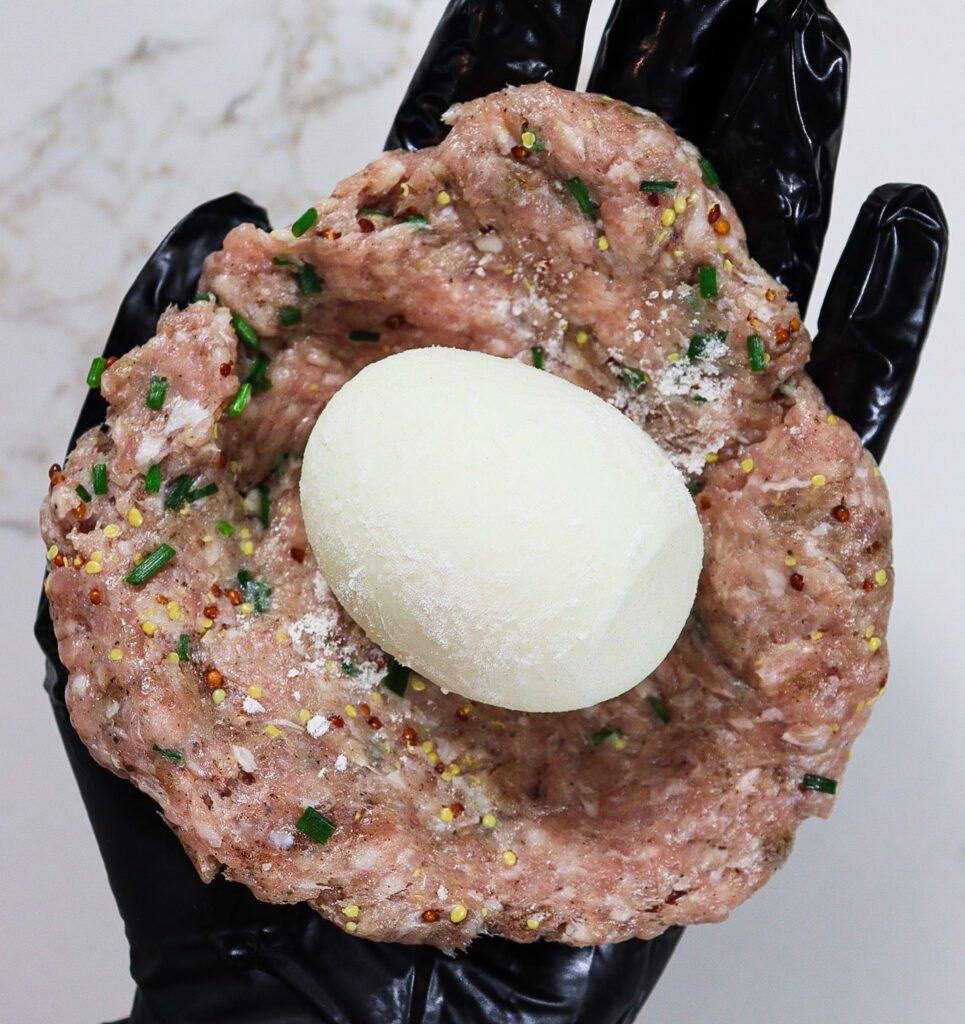
Add the flour to a shallow dish. Roll each egg in the flour and shake off the excess. Take one portion of pork and pat out into a flat disc. Place the egg on the pork and carefully wrap it around the egg, sealing the edges. Store in the fridge until you’re ready to bread them.
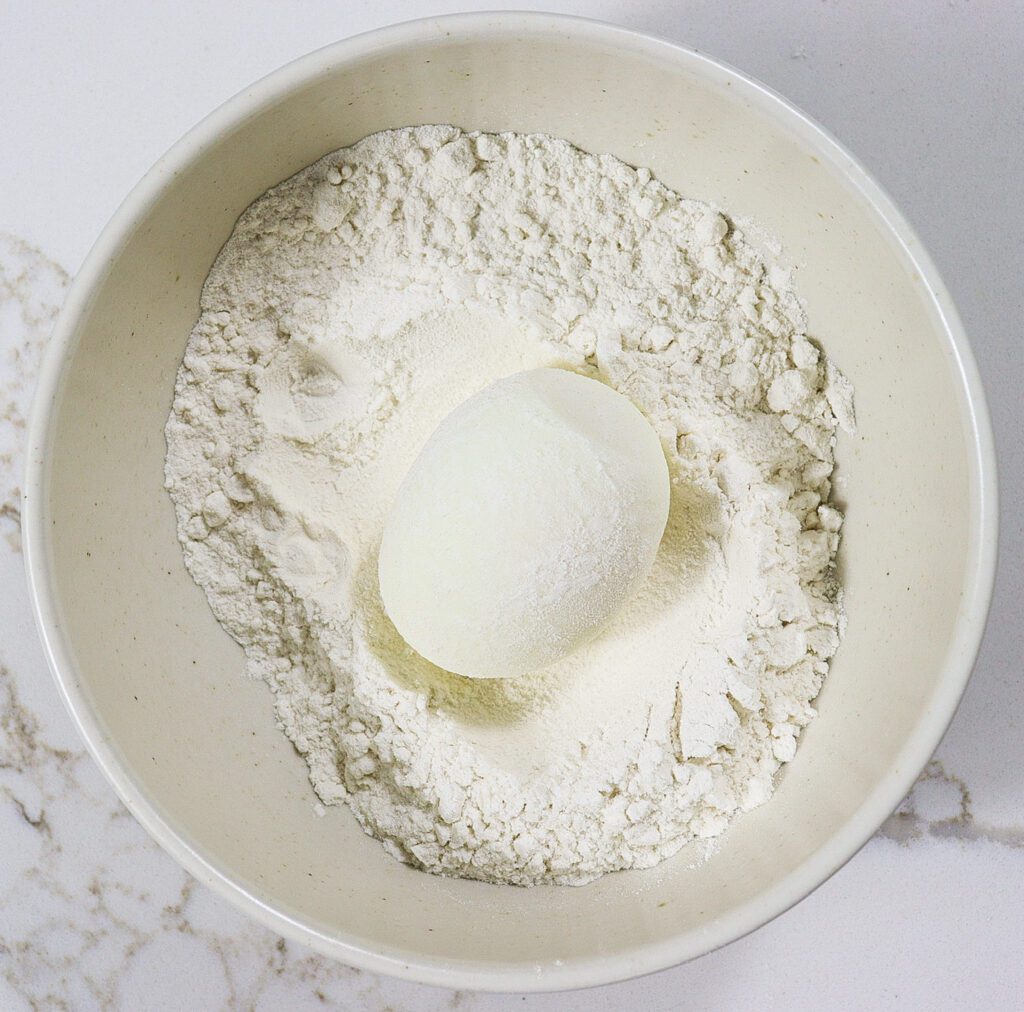
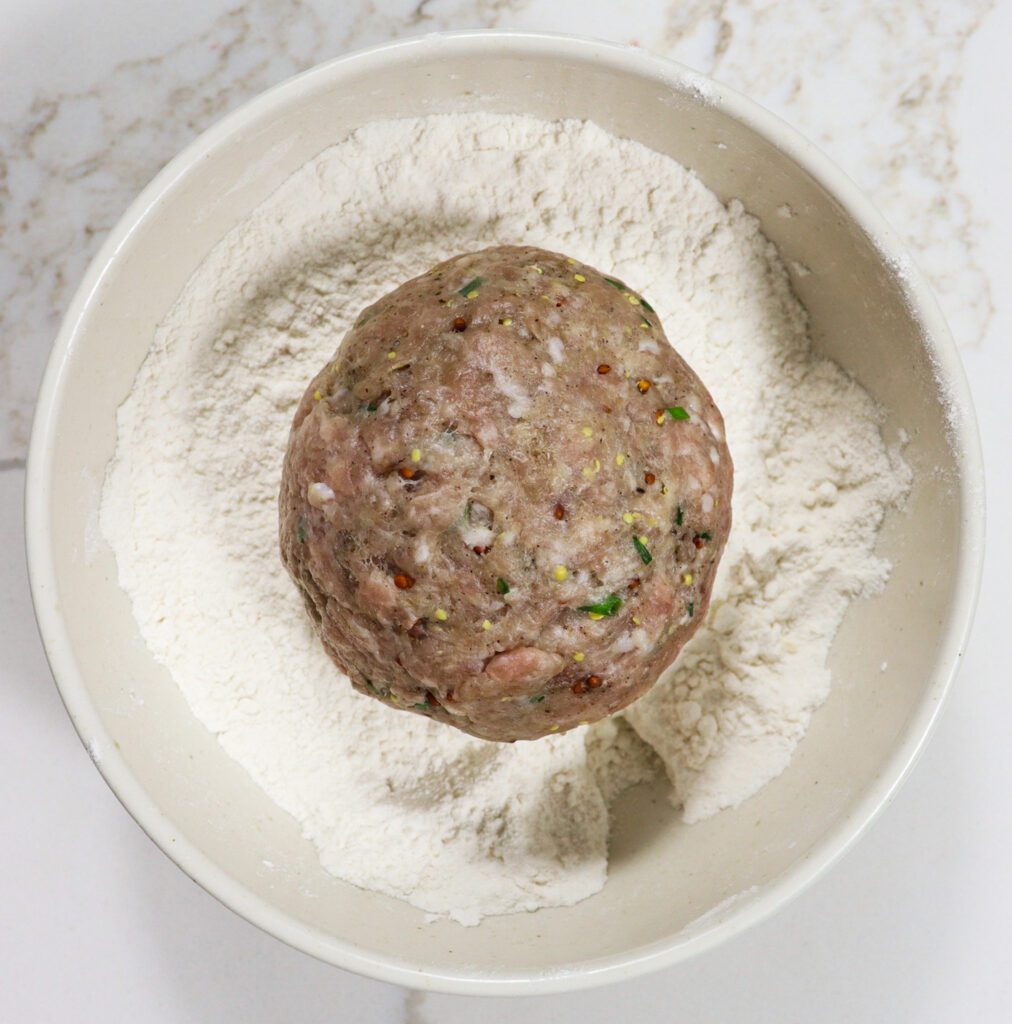
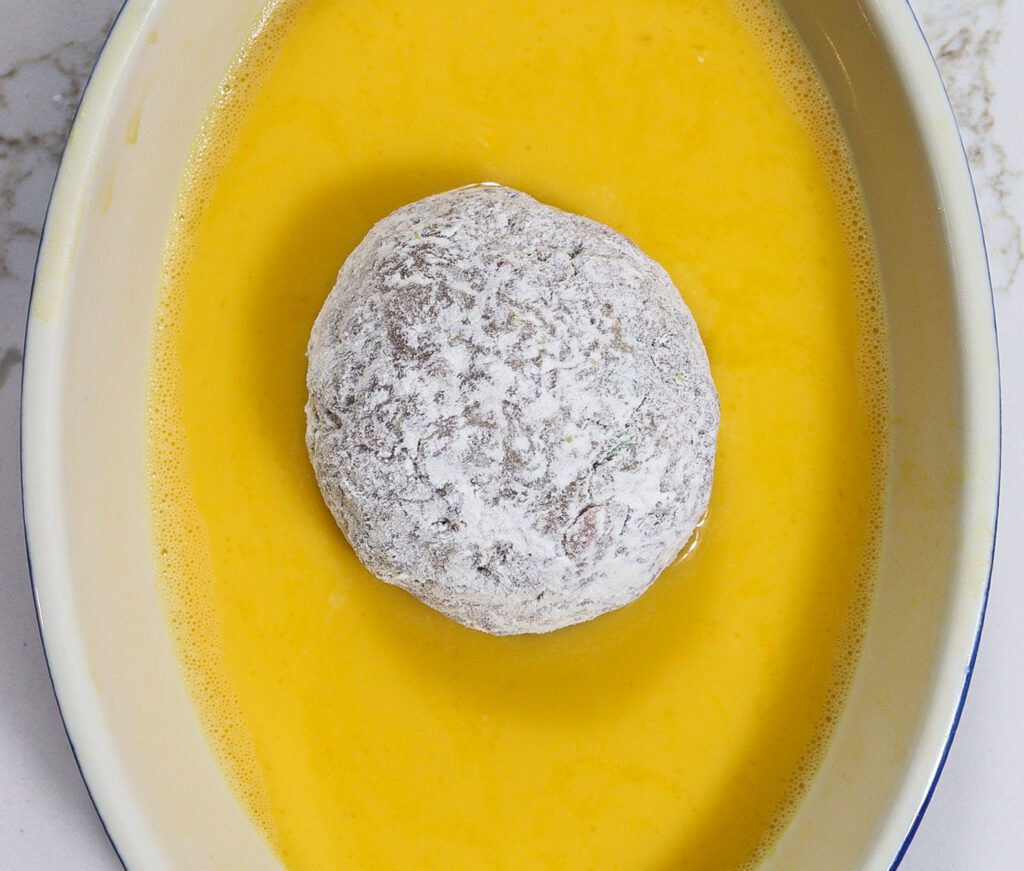
Set up a standard breading station with the flour in the first container. In the second container, whisk the remaining 2 eggs with the water. Add the panko crumbs to the third container.
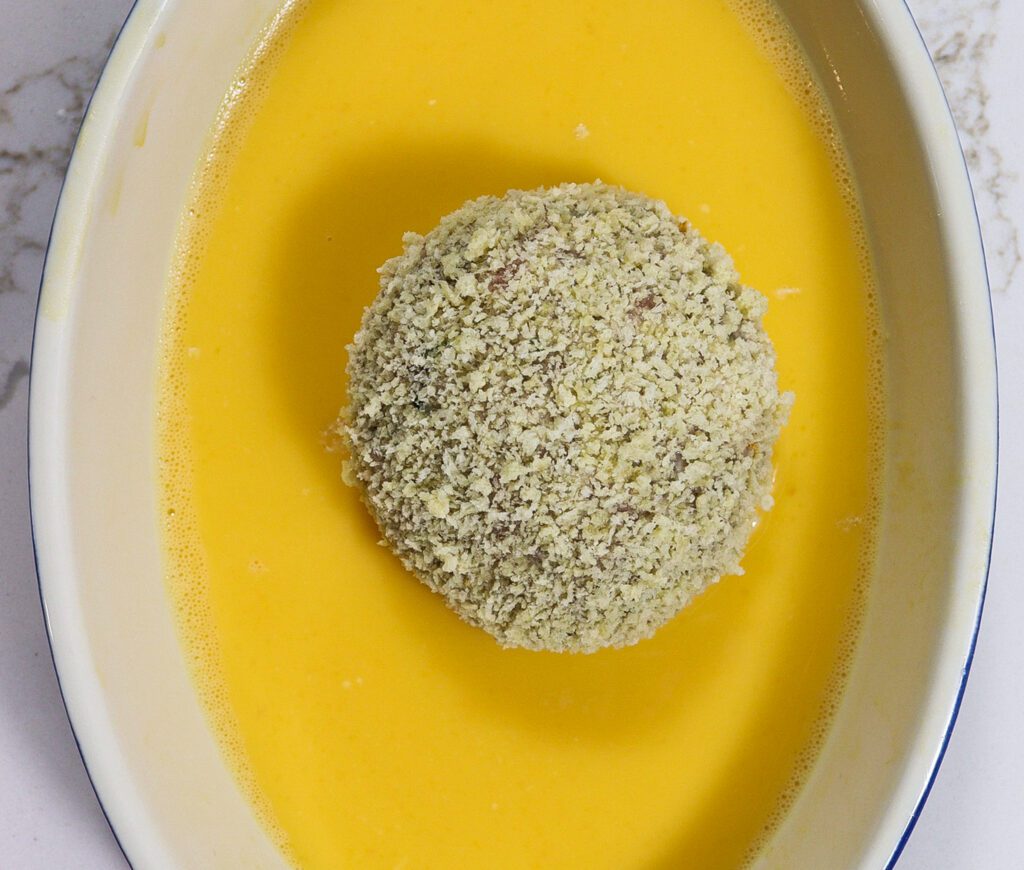
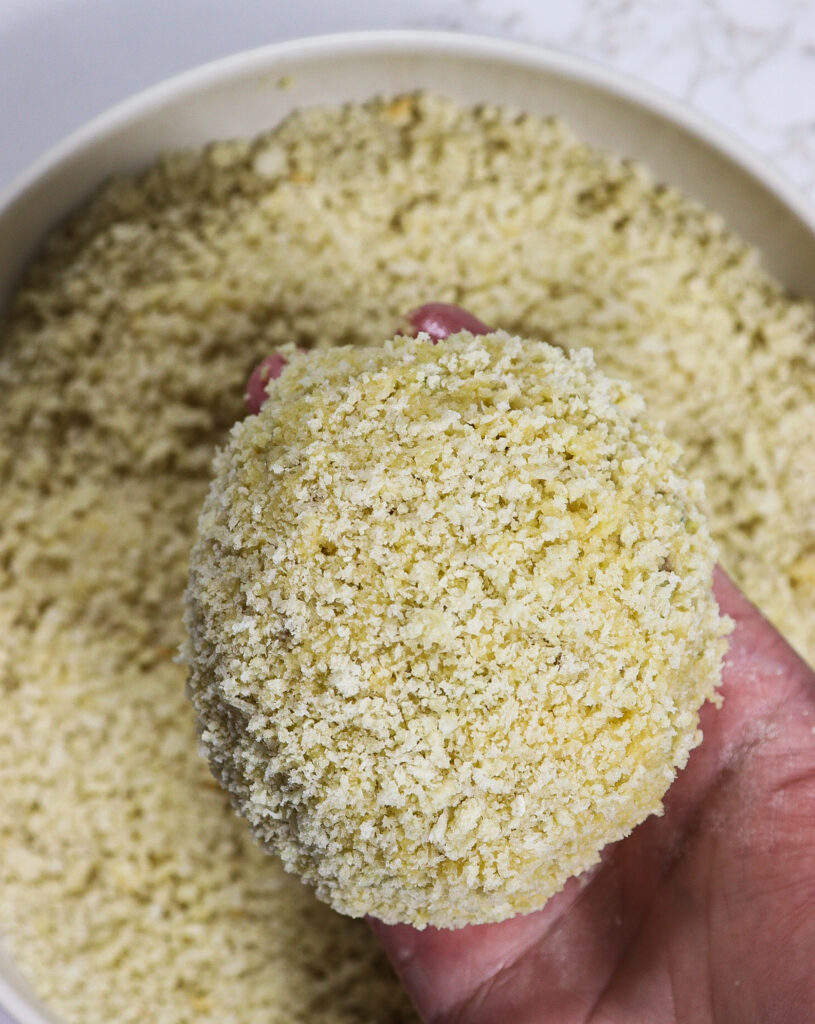
Take one of the sausage-wrapped eggs and roll in the flour. Shake off the excess flour and then roll in the egg mixture. Let the excess egg drip off and then transfer to the crumbs. Roll the egg in the crumbs, gently pressing to ensure the crumbs adhere to the eggs. Transfer to a plate and repeat with the remaining eggs.
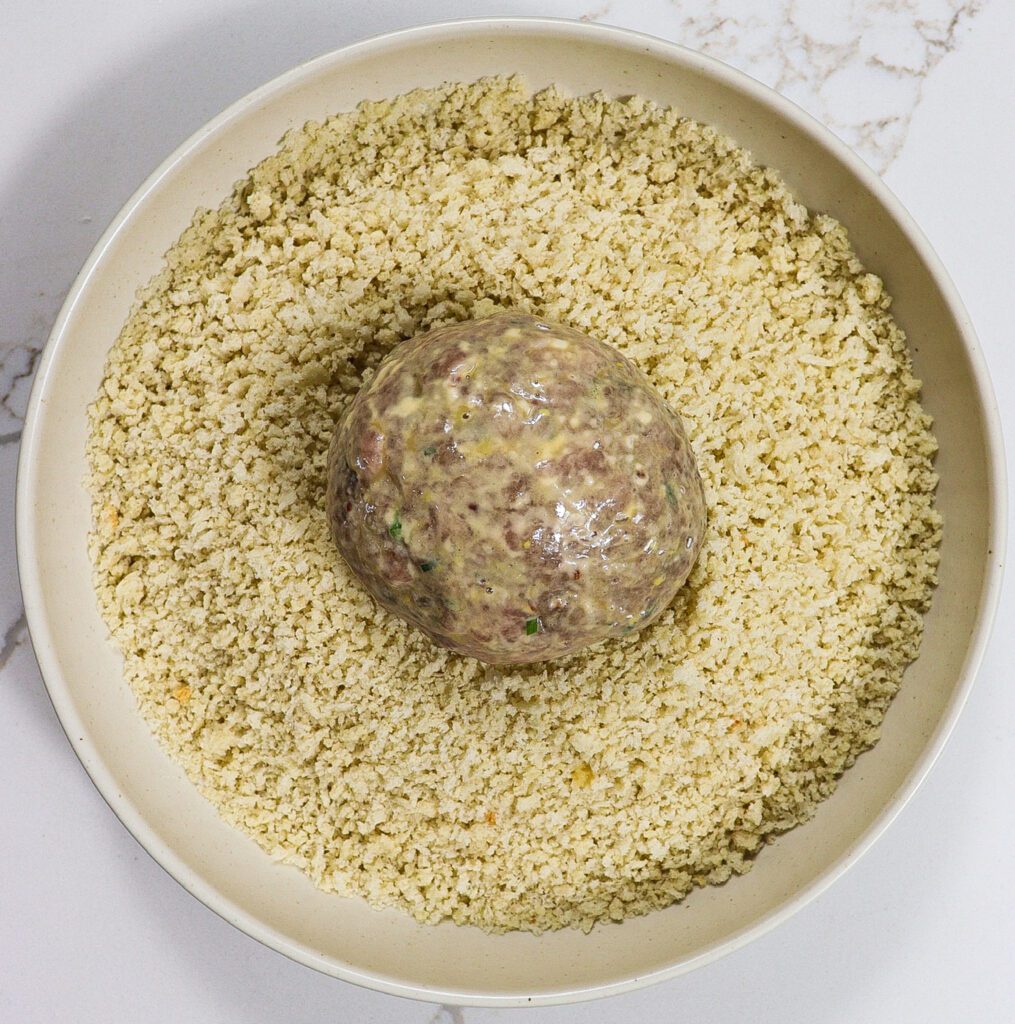
Once the eggs are all breaded, add a second coat. Roll each breaded egg in the egg mixture again followed by the crumbs. Store in the fridge until you’re ready to fry them.
Fry the eggs
Line a baking sheet with a rack or paper towel and set aside. In a deep saucepan, add about 3 inches of vegetable oil, enough to cover the eggs. Place over medium heat and bring the oil up to 320°F. Use a slotted spoon to add 2 or 3 eggs to the hot oil, depending on the size of the pot. Keep the oil between 310°F and 320°F and fry, turning the eggs regularly, for 12 minutes, or until the pork reaches a temp of 165°F.
Transfer the eggs to the rack-lined baking sheet. Repeat with the remaining eggs. If desired, garnish with extra chopped chives. Enjoy!