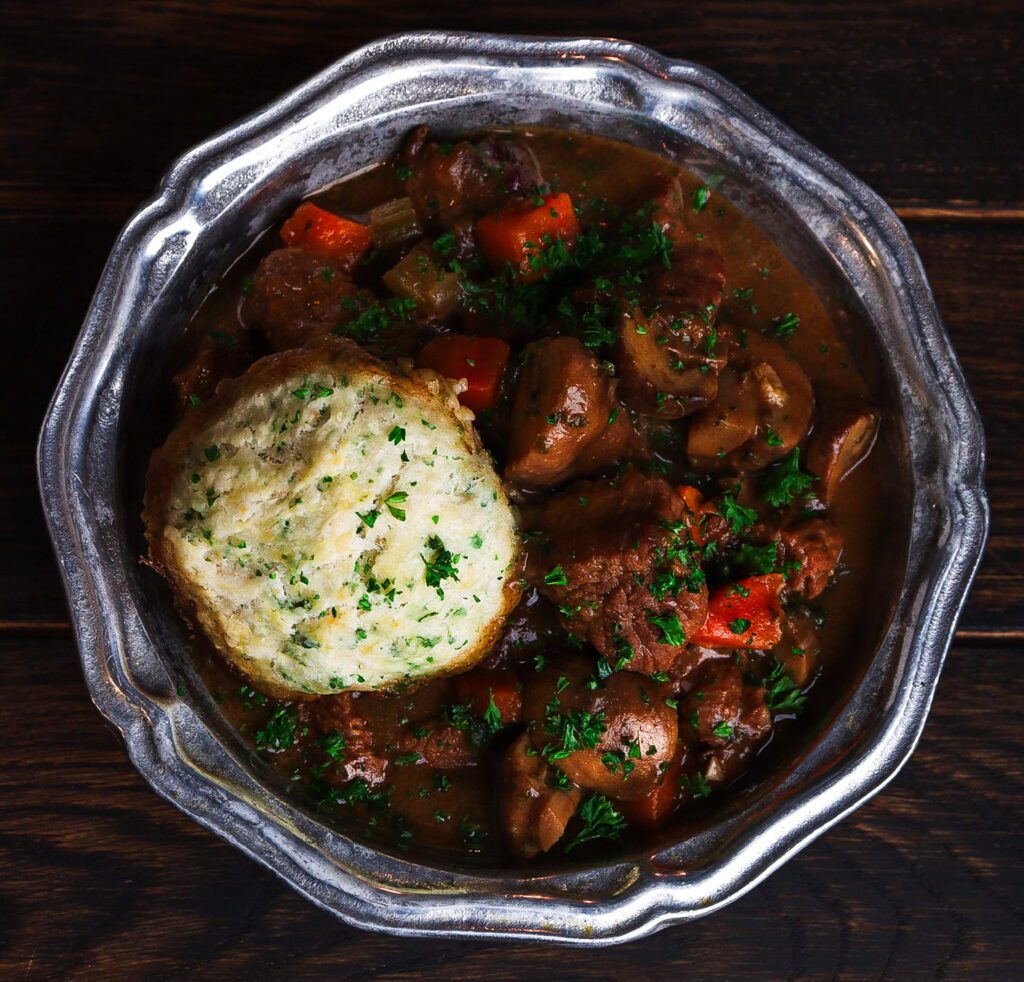
Inspired by the austere table at Wuthering Heights, this flavourful beef and ale stew with suet dumplings is a hearty, timeless classic that fits perfectly within the rugged moors of Yorkshire on a cold wintery evening.
Wuthering Heights: A Gothic Romantic Feast
Across the boundless moors, beneath shifting skies, stands Wuthering Heights, the unwelcoming and treacherous setting of our gothic literary feast. While Catherine Earnshaw, Heathcliff and their tormented heirs have long since passed, their spirits remain bound to this weathered and wild setting. Emily Brontë’s timeless and only novel is a complex tale that begins with foreboding scratches at the window by a restless ghost, weaves through the troubled and violent relationships of the inhabitants of Wuthering Heights, reaches a frenzied peak with Cathy and Heathcliff’s final moment of passion, and painfully illustrates the lasting effects of Heathcliff’s own abuse and the resulting campaign of vengeance he carries out on everyone around him.
Each recipe leads us through this gripping story, reflecting the rugged environment, the social status of its inhabitants and pivotal moments that drive the plot. We invite you to devour these recipes either one at a time, at a wintery or Valentine’s (Galentine’s) Day dinner party, or at your next book club!
An Unwelcome Visitor at Wuthering Heights
The story begins with an unpleasant visit to Wuthering Heights by Mr. Lockwood, Heathcliff’s new tenant at Thrushcross Grange, and a chilling visit from Cathy’s ghost.
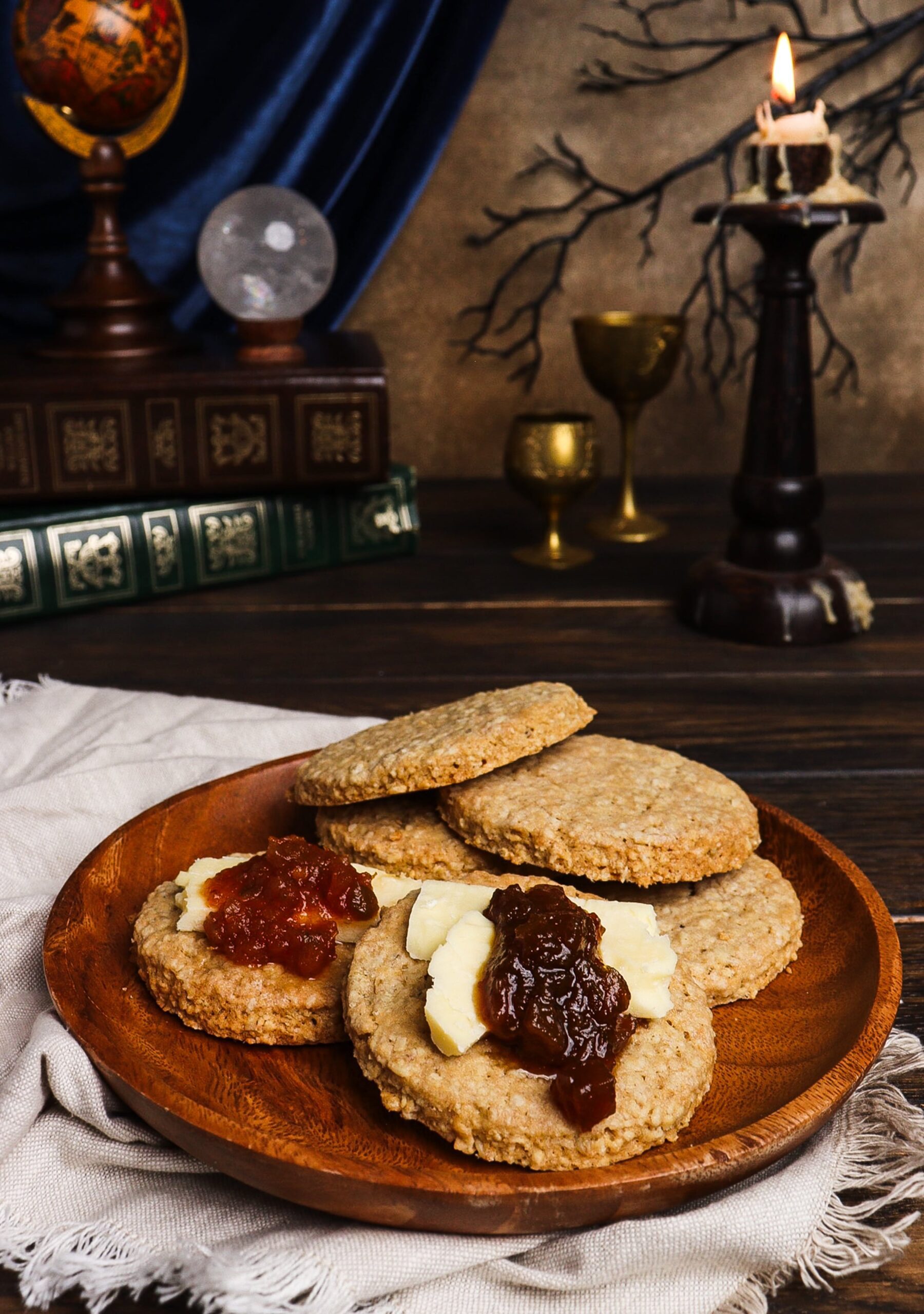
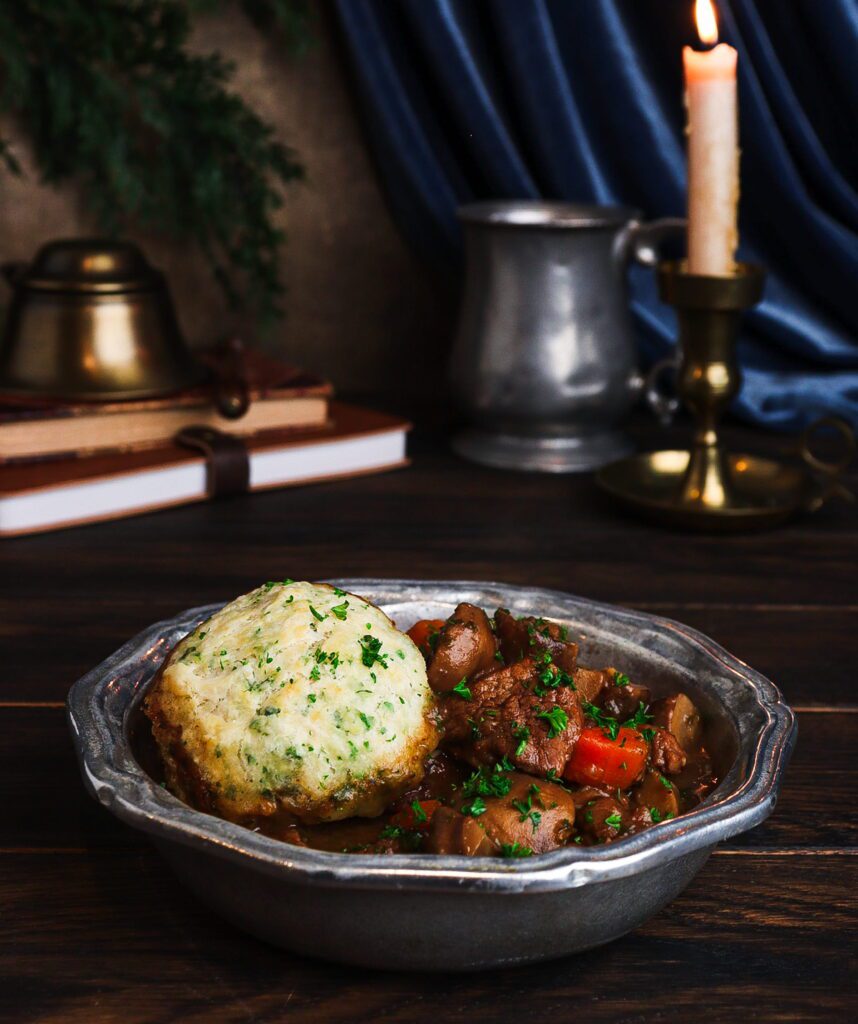
The good-natured Lockwood arrives at Wuthering Heights and discovers the surly and unwelcoming nature of his new landlord Heathcliff. As he makes his way through the austere interior of Wuthering Heights he sees “immense pewter dishes”, “silver jugs and tankards” “oatcakes and clusters of legs of beef, mutton and ham”.
While his visit is cut short, Lockwood is undeterred and returns to Wuthering Heights the following day. This time, he is trapped by a snow storm and insists on spending the night. Unbeknownst to Heathcliff, Lockwood is placed in Catherine Earnshaw’s childhood bedroom where he peruses her diaries. That night, Lockwood is awoken by scratching at his window which he assumes is from the evergreen boughs outside. Instead, as he reaches to close the shutters, he feels the cold small hand of Cathy’s ghost as she pleads “let me in – let me in!”. Lockwood returns to the Grange the next morning, horrified by his encounter, and thus begins this dark and moving tale told to Lockwood by Nelly Dean.
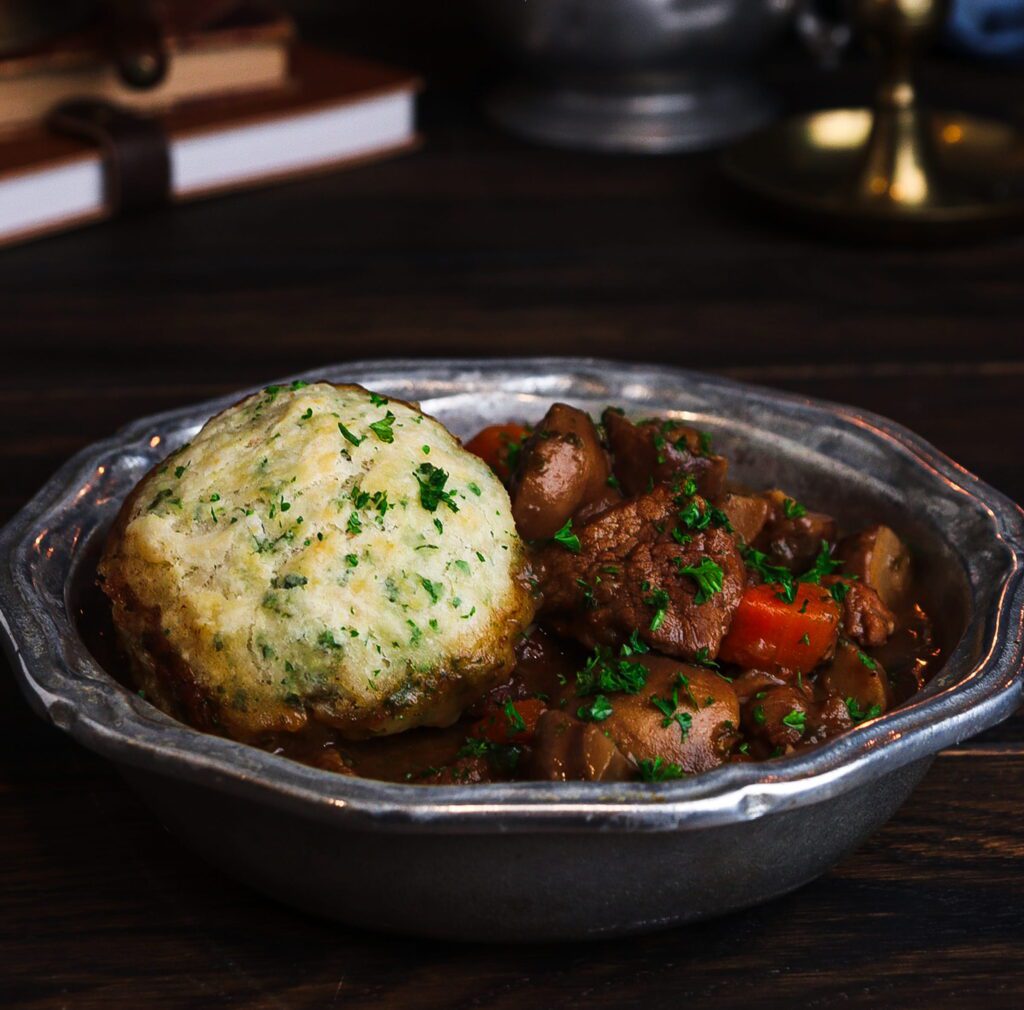
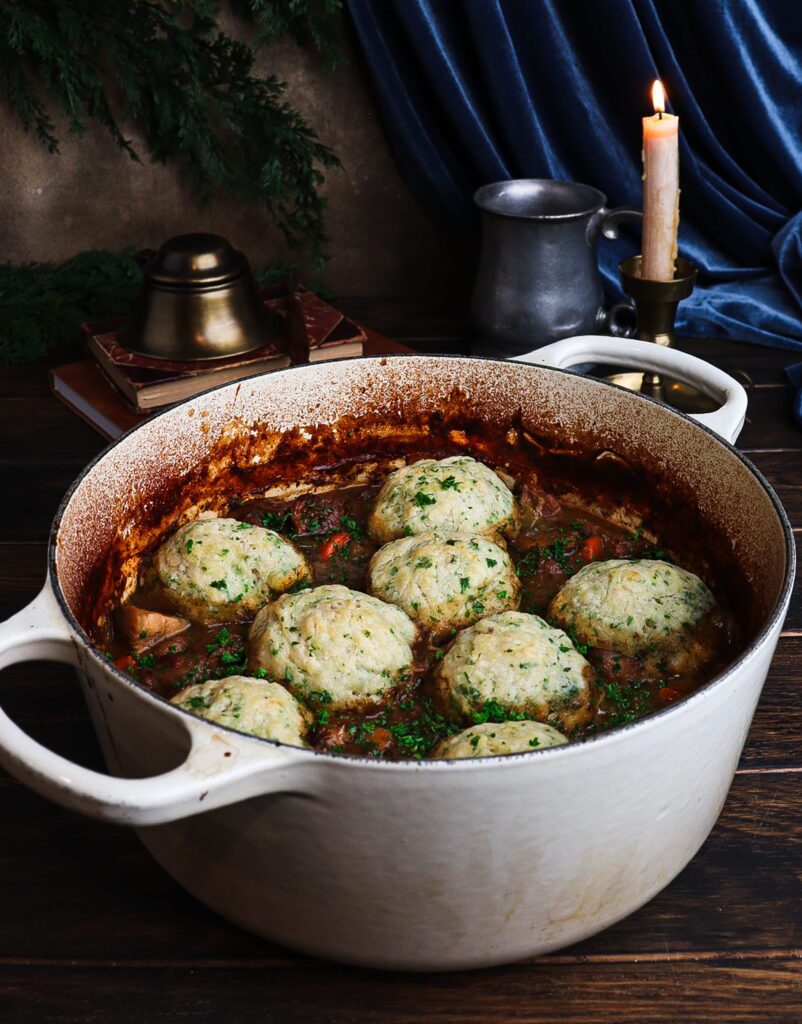
Our first dish is inspired by Lockwood’s introduction (and ours) to Wuthering Heights. At this time in the story, it is inhabited by Heathcliff, Hareton Earnshaw and Cathy Linton. Under Heathcliff’s cruel reign, Wuthering Heights is cold and unfriendly and the evening dinner table is set out of necessity rather than enjoyment. A hearty and nourishing beef and ale stew is offered, chasing away both the chilly climate and reception that Lockwood experiences. The beef is slowly braised until tender in a an ale-infused rich broth. Fluffy dumplings made with beef suet rather than butter are dropped into the bubbling stew and cooked until golden brown. The suet adds a rich, savoury flavour while the dumplings soak up the beefy gravy. A filling bowl of beef and ale stew with suet dumplings is the perfect meal for a chilly winter evening on the Yorkshire moors.
More Wuthering Heights Recipes
- Yorkshire Oatcakes with Honey
- Raspberry Almond Cake
- Split Pea Soup
- Raspberry Rose Cocktail
- Cider Braised Chicken with Bacon and Leeks
- Brown Butter Rolls with Whipped Honey Browned Butter
Ingredients
Beef: My favourite cut of beef for any type of braising is blade or chuck roast. This tough cut becomes meltingly tender after low and slow braising. Cut the blade roast into inch-sized pieces. You can use pre-cut stewing beef instead if desired.
Ale: Beer adds a delicious depth of flavour to the braising liquid. I typically use an amber ale when braising beef, however, you could use your favourite beer instead. A dark stout would also be an excellent option. I would avoid an IPA which can be more bitter. To make this non-alcoholic simply substitute with more beef broth.
Suet: Suet is the hard, white fat around the kidneys typically from beef and lamb. It has a long history of use in both savoury and sweet applications, particularly pastries. It has long been used in British cuisine, such as traditional plum pudding, mincemeat, and steak and kidney pie. Ideal for use in pastries, suet adds a rich and savoury flavour. Vegetable suet is an alternative to the beef variety and may be available in certain regions. If you can’t source suet, butter makes an acceptable substitute.
How to Make Beef and Ale Stew with Suet Dumplings
Brown the beef
Preheat the oven to 325°F. Trim the blade roast, removing any large pieces of fat. Cut the beef into inch-sized chunks and pat dry. Dust the beef with 2 tbsp of flour, tossing to coat evenly.
Heat the olive oil in a dutch oven over medium high heat. Add a few of the beef pieces to the dutch oven being careful not to crowd the pan. Allow to sear until browned on one side. Flip the beef and brown the other side. Remove the beef to a plate and set aside. Repeat until all of the beef is browned, adding a bit more olive oil to the dutch oven if it looks dry.
Sauté the vegetables
Once all the beef is browned, turn the heat down to medium low. Add the diced onions and sauté for a couple of minutes until they begin to brown. Add the carrots, celery, and mushrooms and cook for another couple of minutes. Tie the thyme, and bay leaves together with twine to make a bouquet garni and set aside.
When the vegetables have softened, add the minced garlic, tomato paste, kosher salt, and pepper. Sauté for another minute until the garlic is fragrant.
Braise the beef
Turn the heat back up to medium high. Deglaze the pan with the ale, scraping up any bits that have stuck to the bottom of the dutch oven. Return the browned beef to the pot along with any accumulated juices. Add the Worcestershire sauce and bouqet garni.
Top with the beef broth, adding more if needed so the beef pieces are just barely covered. Cover the Dutch oven and place in the oven. Braise the beef for 1 1/2 hours or until tender.
Make the suet dumplings
While the stew is braising, prepare the dumplings. Depending on the size of the suet pieces, you may need to break it down. In the bowl of a food processor, combine the flour, baking powder, and salt. Pulse once or twice to mix. Add the suet and pulse several times until the suet resembles small peas.
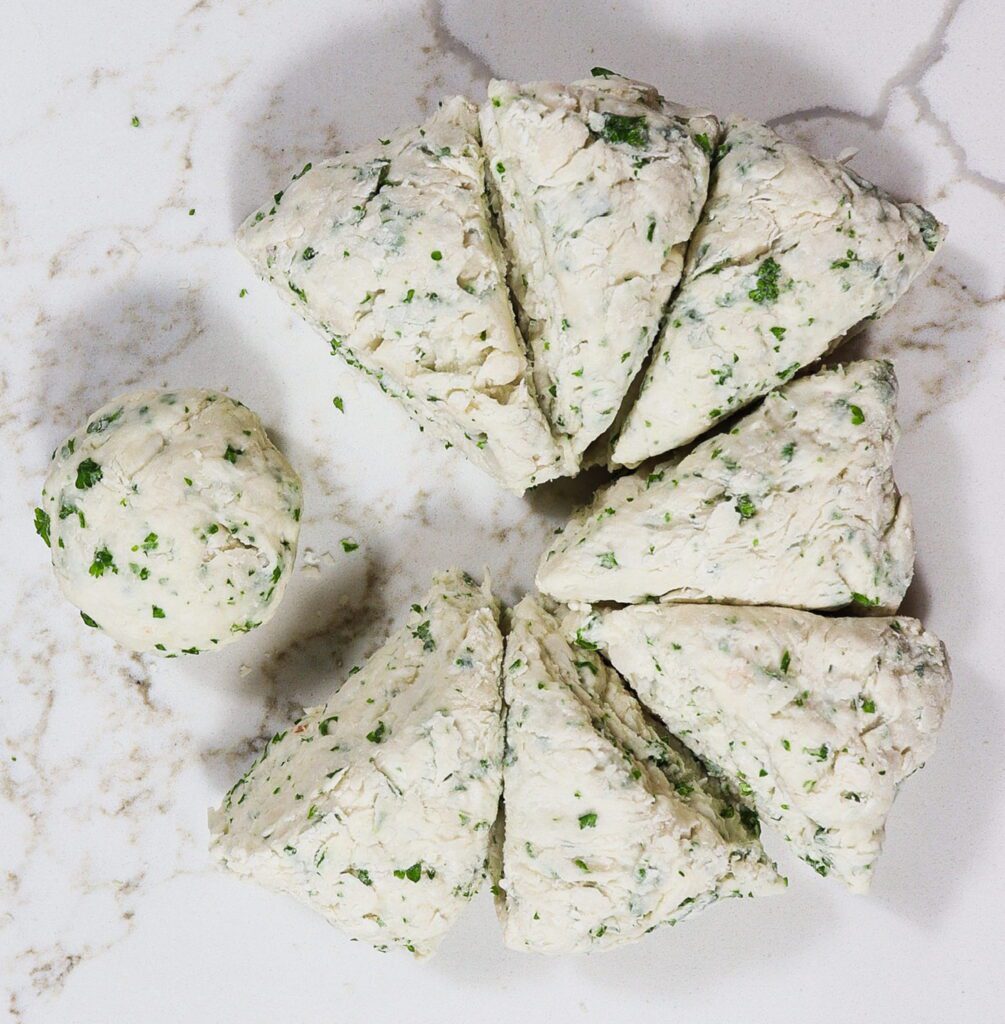
Transfer to a mixing bowl and stir in the parsley. Stir in the water, adding a bit more if needed to make a stiff dough. Knead the dough gently a few times until it comes together into a ball. Divide the dumpling dough into 8 pieces and roll into balls. Set aside.
Thicken the stew
After braising, place the Dutch oven on the stove over low heat. Uncover and skim the fat. Spoon off about half a cup of the braising liquid into a small bowl. Whisk the remaining flour into the reserved liquid until smooth to make a slurry. Pour the slurry into the stew, stirring constantly to prevent lumps. Simmer for another 2 to 3 minutes until the stew thickens. Stir in the chopped parsley.
Cook the suet dumplings
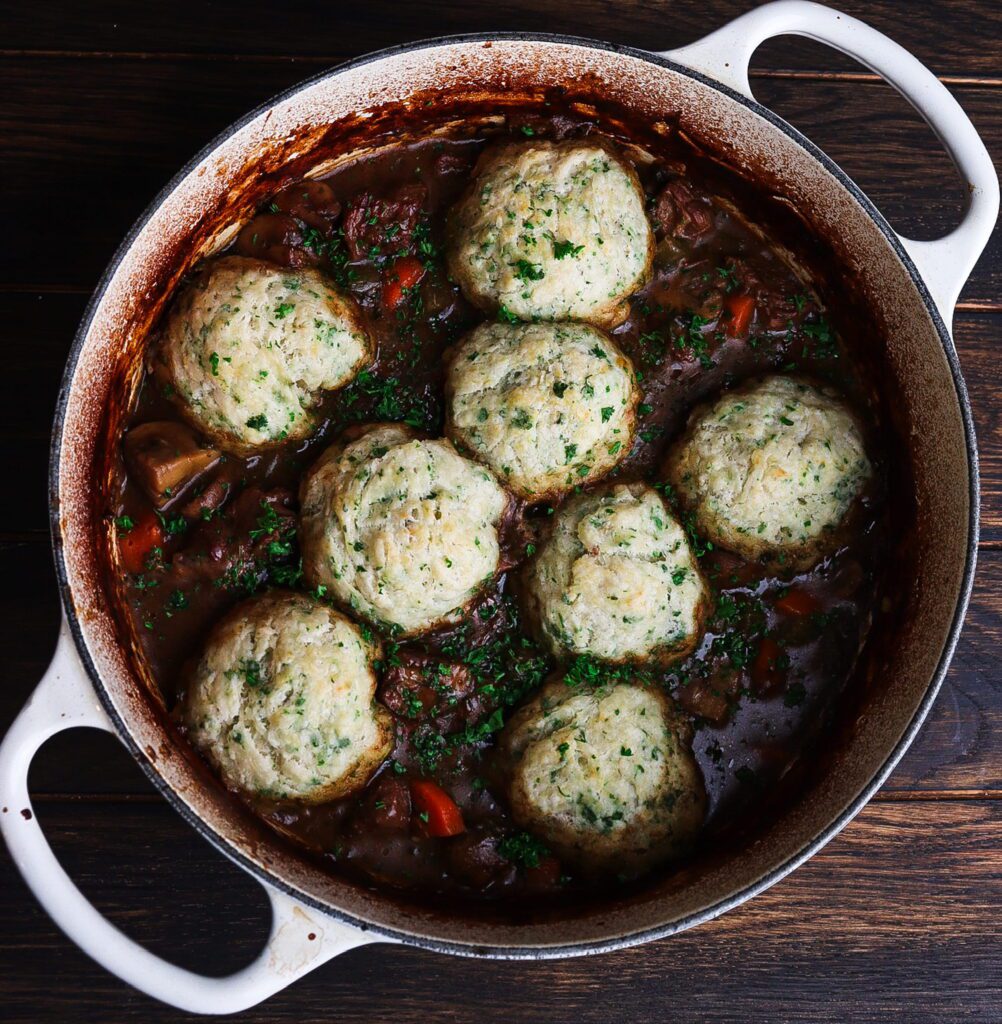
Turn the oven to up to 400°F. Drop the dumplings into the stew. Place the stew back in the oven and bake uncovered for 20 to 25 minutes until the dumplings are golden brown and cooked through. Garnish with more chopped parsley and enjoy!