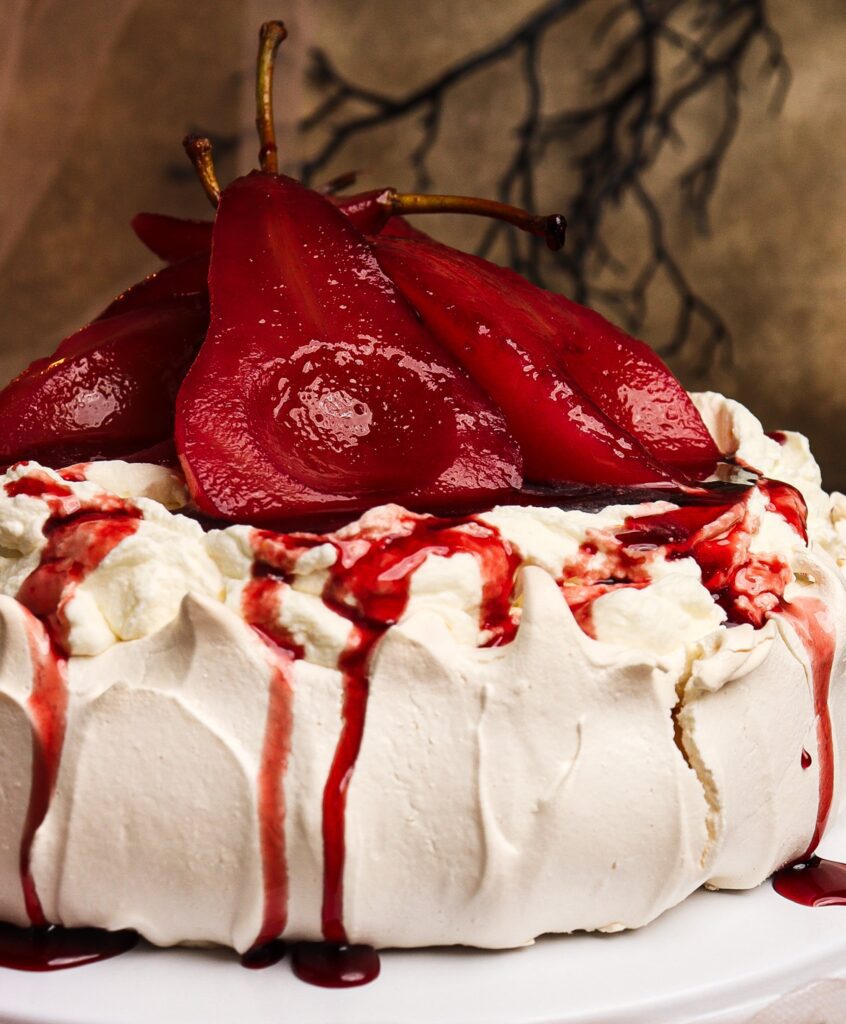
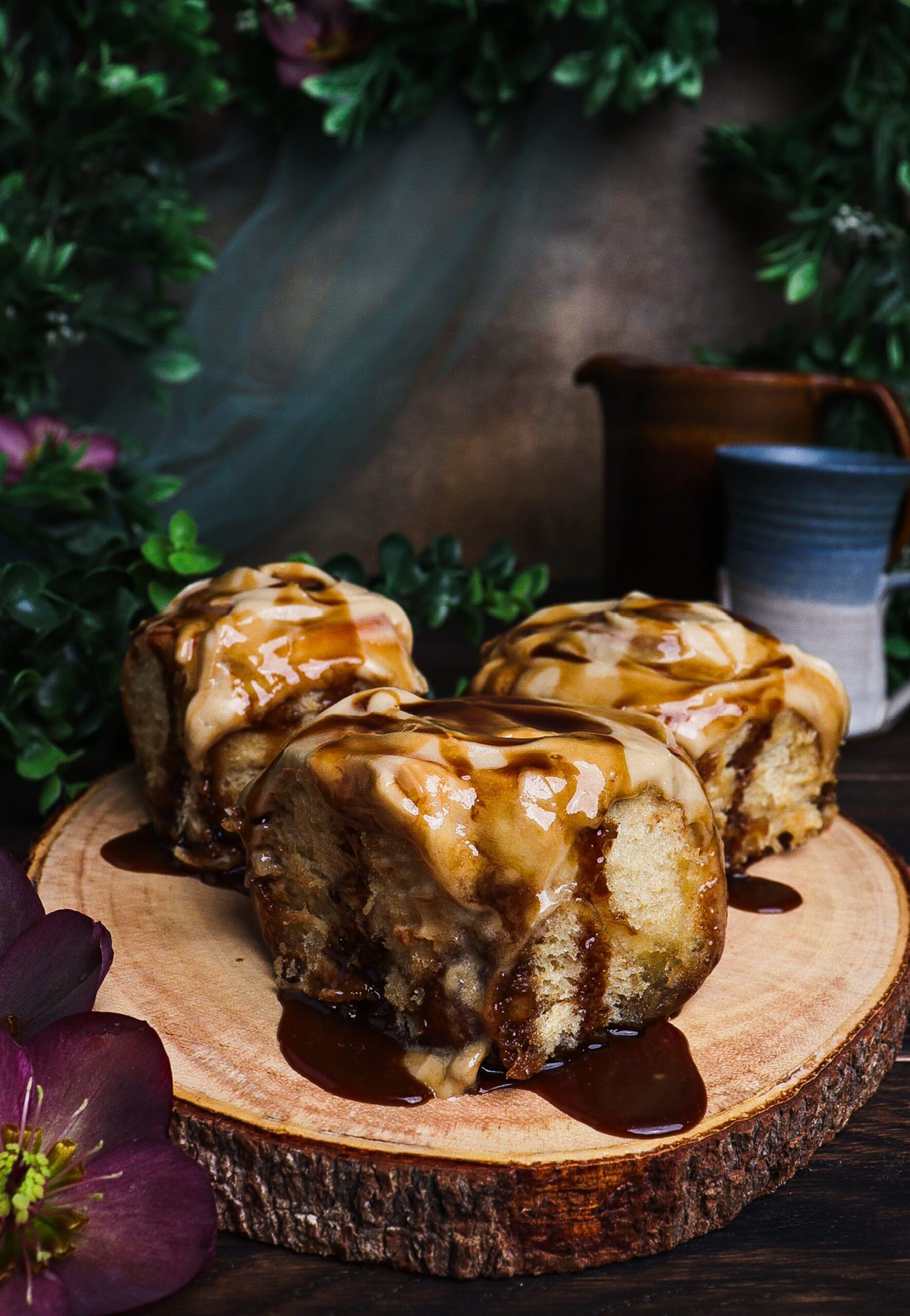
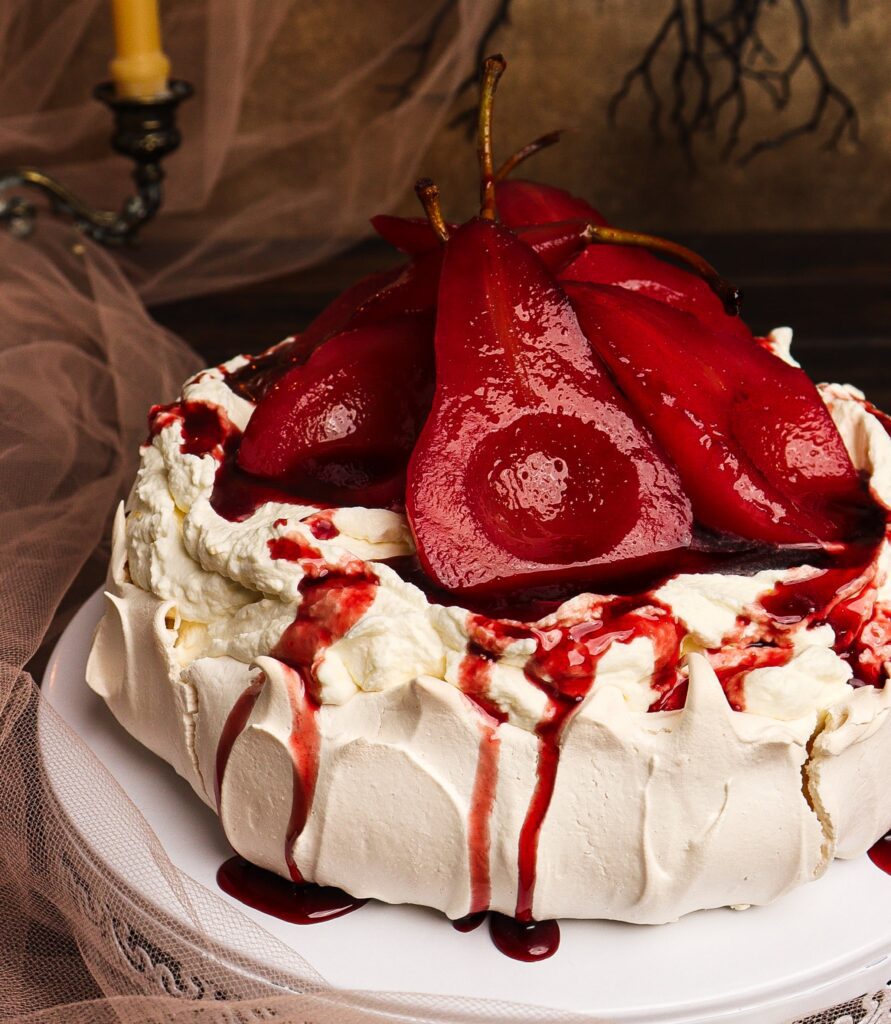
The snowy white meringue crowned with blood red spiced pears in the cranberry mulled pear pavlova capture the innocent beauty and tragic end to Elizabeth's wedding night in Mary Shelley's Frankenstein.
Frankenstein: A Gothic Culinary Journey
In Frankenstein, Mary Shelley weaves a tale of creation and ruin – and most importantly, hunger. Hunger for knowledge, power, love, companionship, and vengeance. To honour this gothic romance masterpiece, we are following the journey of Victor Frankenstein through food – from his days as an inquisitive scientist to his ultimate poetic ruin by the will of his unbridled creation.
Each recipe leads us through Dr. Frankenstein’s and the creature's story – the frozen Arctic, a candlelit laboratory in Bavaria, the alpine woods and its cozy cottages, and the ultimate final act of vengeance enacted upon Dr. Frankenstein’s bride by the creature. These recipes draw on the landscapes and unique circumstances of the characters, reflecting the dualities defined by Frankenstein – isolation and familial warmth, love and vengeance, innocence and hubris. We invite you to devour these recipes either one at a time, at an autumnal gathering, or at your next book club!
Elizabeth, Dr. Frankenstein's Bride
When Victor refuses the creature's one request – to assemble and give life to a female companion – the creature lashes out, vowing to wreak vengeance on Victor. The creature utters the ominous words "I will be with you on your wedding night...". After the creature murders the doctor's close friend, Henry Clerval, Victor assumes that the creature intends to murder him next. He quickly marries the love of his life, Elizabeth Lavenza, and whisks her away to Italy on their honeymoon. While Victor frantically searches the perimeter for the creature to ensure he and his bride are safe, the creature tragically enters Elizabeth's bridal suite and executes his greatest act of revenge by strangling Elizabeth to death.
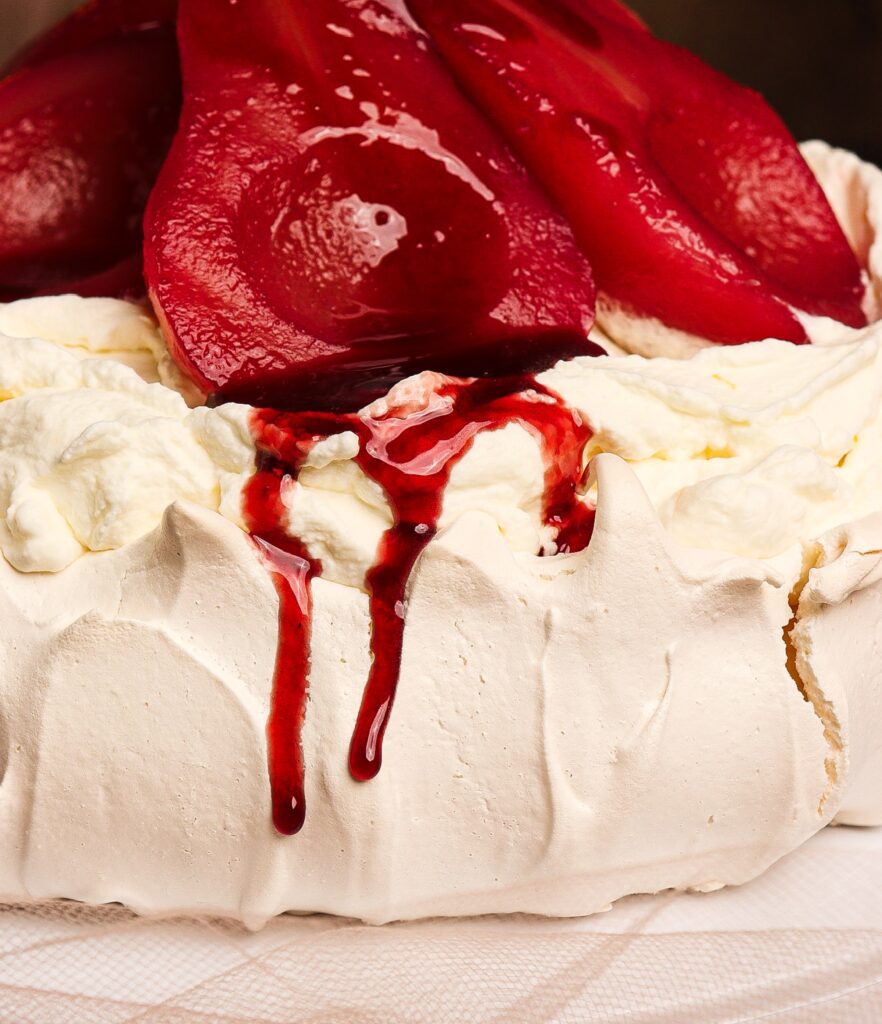
Elizabeth is the ideal woman of her time – nurturing, beautiful, sympathetic, and devoted to Victor. She offers Victor love, compassion and refuge from his guilty conscience – everything Victor denies the creature. Sweet, delicate, and light as air, this snow white pavlova is the perfect dessert for the bride on her wedding night. Crisp on the outside and marshmallow soft on the inside, the meringue is crowned with a cloud of orange-scented whipped mascarpone cream. Pears poached in a blood red cranberry mulled wine are the only hint of the terror to come...
Ingredients
Pears: When it comes to poaching pears it’s a good idea to select a firmer type of pear that will hold up to the long, slow cooking process. Bosc or Anjou are two good choices for poaching. Bartlett’s, while widely available, are a bit softer and may fall apart sooner in the poaching liquid. That being said, you certainly can use Bartlett’s if you choose. Keep an eye on them and take them out as soon as they’re soft.
Red wine: Choose a medium bodied red wine such as Merlot or even Syrah. A lighter red wine may not colour the pears as dark. Don’t bother using an expensive bottle here – with all the added flavours it would be wasted.
Cranberry juice: Tart cranberry juice adds tanginess to the mulled wine syrup to balance the sweetness of this dessert. Be sure to use a pure or unsweetened cranberry juice rather than a juice blend or cranberry cocktail which has added sugar.
Vinegar and cornstarch: The small amount of vinegar and cornstarch added to the meringue is what gives pavlova its characteristic soft and marshmallowy interior.
Mascarpone: Italian mascarpone cheese adds richness and stability to the whipped cream topping as well as a delicious, subtle flavour.
How to Make Cranberry Mulled Pear Pavlova
Make the meringue
Preheat the oven to 250°F. Line a baking sheet with parchment paper and set aside. Add the egg whites to the bowl of a stand mixer. Whip the egg whites on high speed with a whip attachment. When the egg whites begin to stiffen and create soft peaks, begin to slowly add the sugar. Add the sugar in several small increments.
Once the sugar is fully incorporated, continue beating the egg whites until it has dissolved completely. You can tell if the sugar is dissolved by rubbing a little meringue between two fingers – it should feel completely smooth with no grains of sugar in it. If you still feel the sugar, continue to beat the meringue. This will take 5 to 8 minutes.
Meanwhile, combine the vanilla, vinegar, and cornstarch in a small bowl and stir until the cornstarch is dissolved. When the sugar has been fully dissolved into the egg whites, turn the speed down to low. Add the cornstarch mixture and then turn up the speed. Mix until the cornstarch mixture is fully incorporated.
Bake the meringue
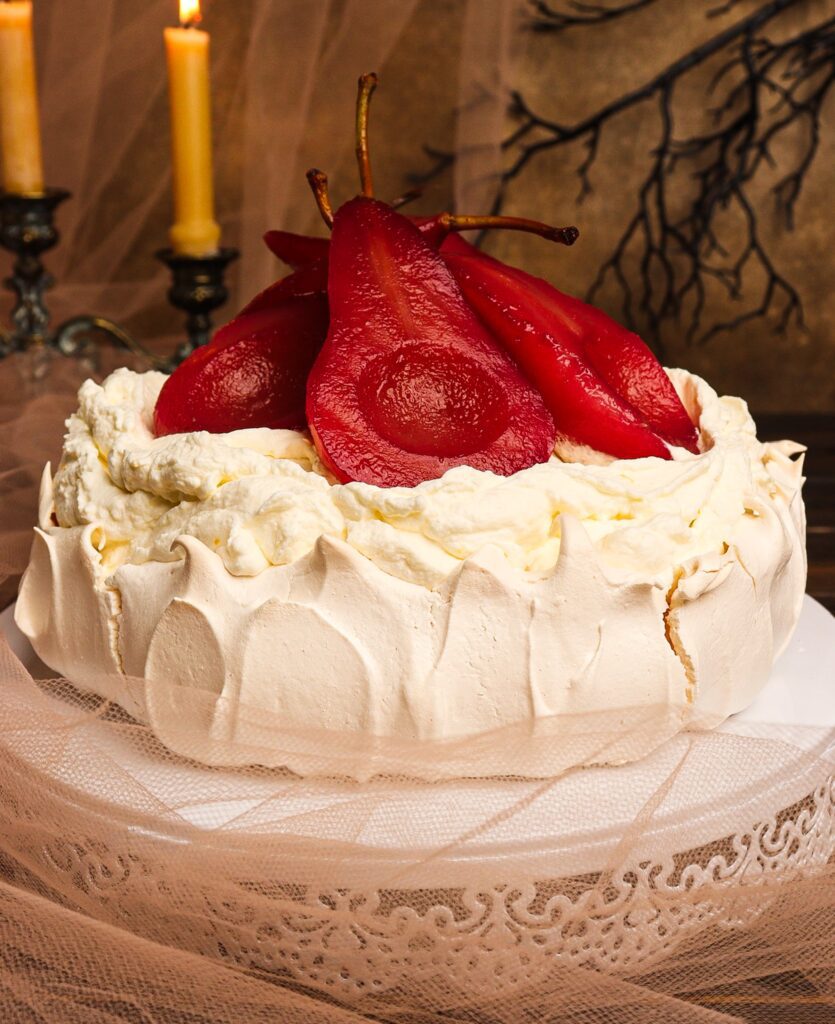
Spoon the meringue onto the prepared baking sheet and shape into a 7 or 8-inch circle; the meringue will spread as it bakes. Use a teaspoon to create a shallow indent in the middle of the circle for the filling while building up the rim slightly. Drag the teaspoon up the outer edge of the pavlova to create a decorative edge.
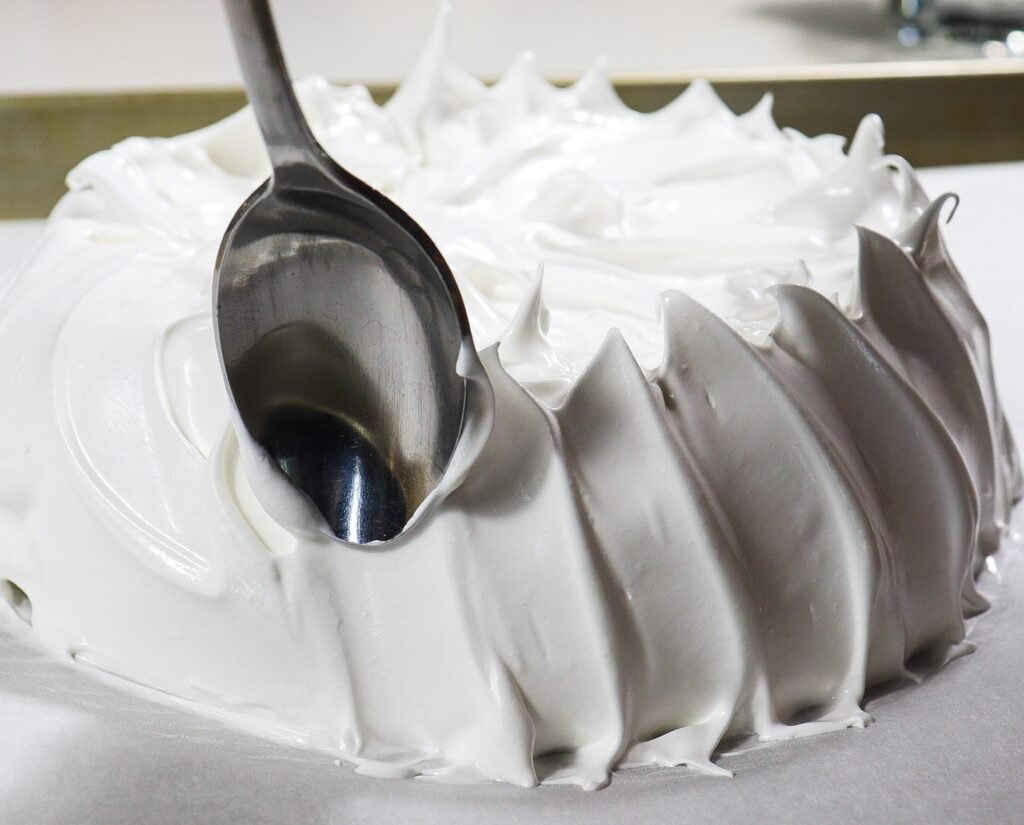
Bake the meringue for 1 hour. After 1 hour, turn the oven off and leave the meringue in the oven for another hour then remove and allow to cool completely.
Poach the pears
Poach the pears while the meringue is baking. Peel the pears and cut in half, leaving the stem intact if possible. Use a melon baller or metal spoon to scoop out the inner core. Use a vegetable peeler to cut half the rind off the orange. Use a zester to remove the remaining zest from the orange and reserve for the whipped mascarpone cream. Juice the orange.
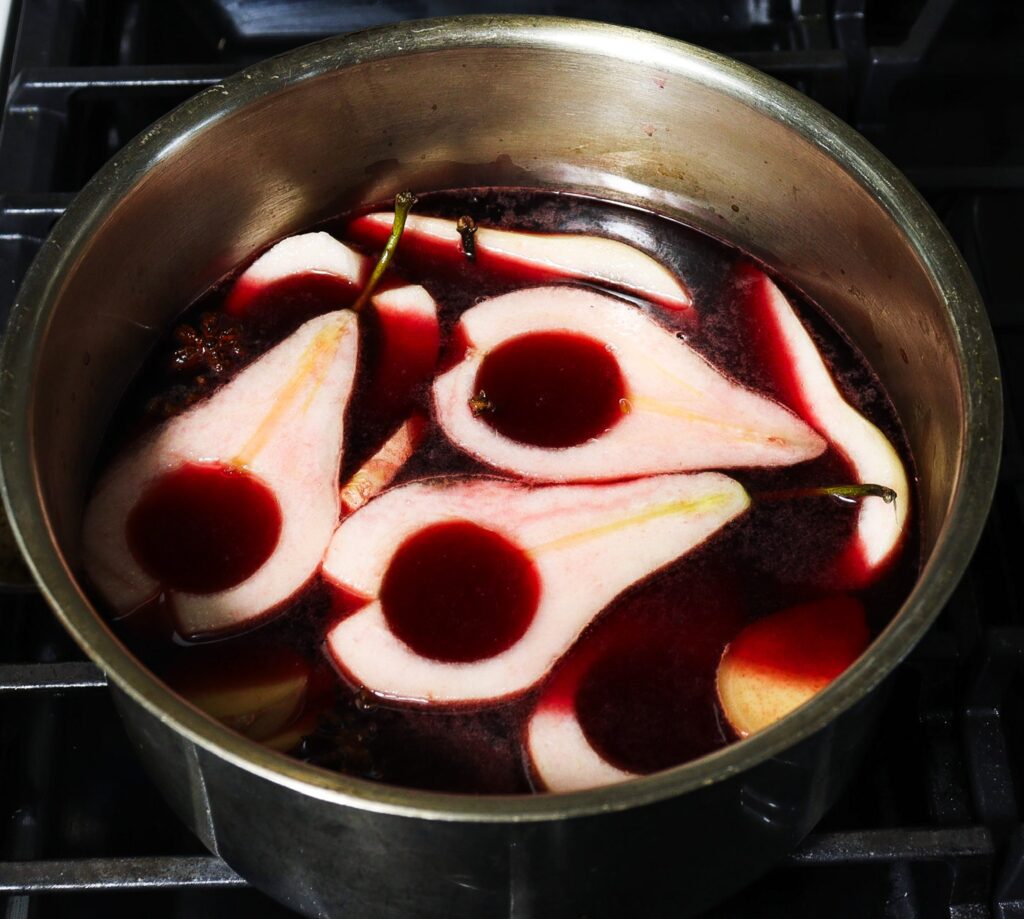
In a saucepan, combine the red wine, cranberry juice, orange juice, orange liqueur, and sugar. Add the ginger slices, orange peel strips, cinnamon stick, star anise, and whole cloves. Place over medium high heat. Add the pears and bring to a simmer. Turn down the heat and simmer on low for 20 to 30 minutes until the pears are tender when pierced with a paring knife. Use a spoon to flip the pear halves a few times to encourage even poaching.
Reduce the poaching liquid
When the pears are cooked, remove them from the poaching liquid with a slotted spoon. Transfer the pears to a plate and let cool. Strain the poaching liquid into a clean saucepan and discard the spices. Bring the poaching liquid up to a boil. Continue to boil, uncovered, until it reduces down to a syrup. This should take 10 to 15 minutes.
Reduce the liquid down to one cup – it should be slightly syrupy in consistency. The syrup will thicken even more once it cools. Chill the pears and reduced syrup before serving.
Make the whipped cream
In the bowl of a stand mixer, combine the heavy cream and icing sugar. Beat with a whip attachment until soft peaks. Add the mascarpone, orange liqueur, and reserved orange zest and beat just until combined and the mixture has stiff peaks.
Serve the Cranberry Mulled Pear Pavlova
Carefully transfer the meringue to a serving platter. Pile the whipped mascarpone cream on top of the meringue, spreading to the edges. Arrange the pear halves on top and drizzle with some of the reduced syrup. Cut the pavlova into wedges and serve with the remaining syrup. Enjoy!