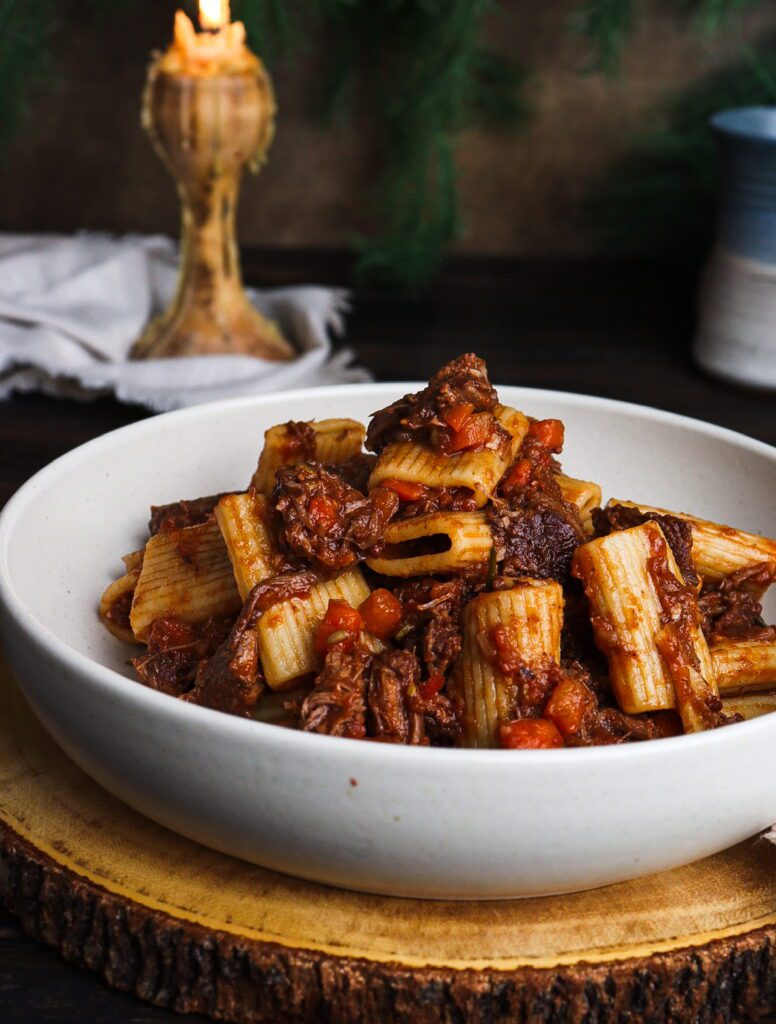
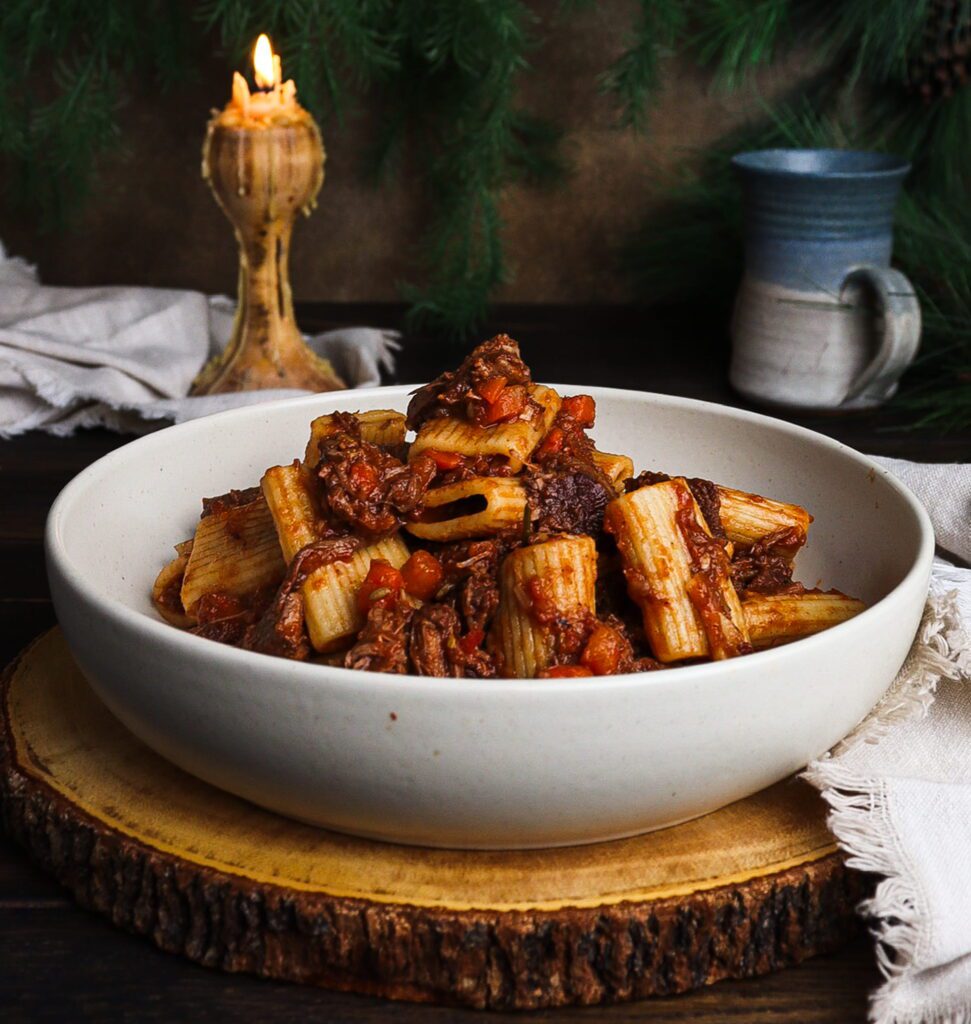
On the coldest of evenings, this slowly braised lamb and fennel ragu will simmer low on the stove, filling the kitchen with cozy warmth and comforting aromas.
A Warm and Comforting Braise
As the winter months linger on, cold and rainy weather can make spring feel farther away than ever. On evenings like these, we turn to slow braised dishes with hearty flavours. Tender chunks of lamb are gently simmered with aromatics, crushed tomatoes, and red wine for a rich and hearty ragu. Fresh fennel and fennel seeds add a delicate flavour to this robust braised lamb dish. Served with rigatoni, this braised lamb and fennel ragu is the perfect comfort dinner for a cold winter's evening – simple and rustic, yet luxuriously indulgent.
Ingredients
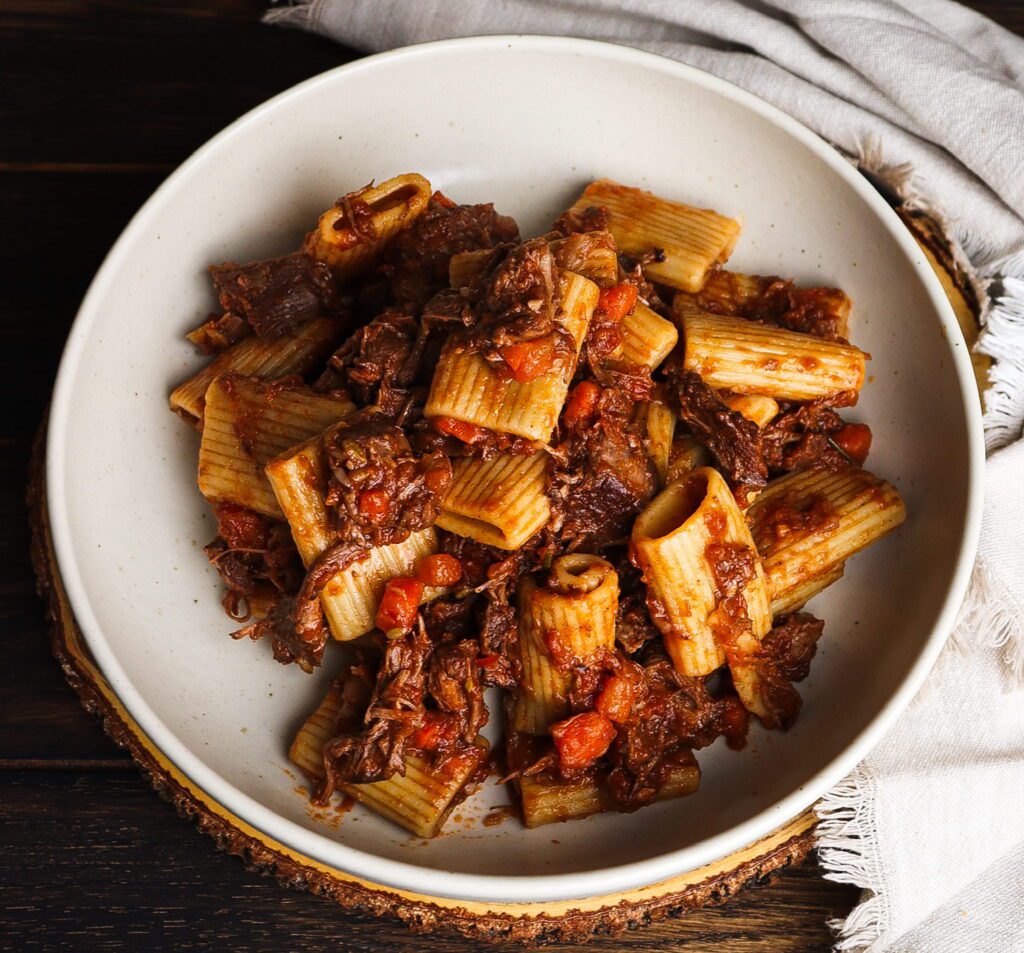
Lamb: I recommend using lamb shoulder in this slow braised ragu. The shoulder is a tougher cut with more connective tissue which is perfect for braising. The long, slow cooking time will break down that connective tissue resulting in meltingly tender meat. If possible, look for a boneless shoulder roast which will make cutting the meat easier. Bone-in shoulder can be tricky to cut as there will likely be two large bones you will need to cut around. Lamb shoulder chops can also be used and cut down into 2 or 3 pieces. Another option would be to use lamb shanks, in which case the meat will be pulled from the bone after braising.
Fennel: This recipe uses fennel two ways. Fresh fennel bulb is diced and used to replace the celery typically used in a standard mirepoix, while fennel seeds are added for additional flavour.
Red wine: Choose a decent, full-bodied red wine such as a merlot or cabernet sauvignon. There is no need to use an expensive wine when cooking – a basic wine will work just fine. To make this dish non-alcoholic, substitute with more broth.
Rigatoni: Rigatoni is commonly paired with a slow braised meat ragu and is a favourite of mine. Pappardelle is another popular pasta served with ragu; however, you can certainly use what ever style of pasta you prefer.
How to Make Lamb and Fennel Ragu
Brown the lamb
To prepare the lamb, trim off any fat. Cut the lamb into 1-inch cubes and pat dry. Heat the olive oil in a dutch oven over medium high heat. Add a few of the lamb pieces to the dutch oven being careful not to crowd the pan. Allow to sear until browned on one side. Flip the lamb and brown the other side. Remove the lamb to a plate and set aside. Repeat until all the lamb is browned, adding a bit more olive oil to the dutch oven if it looks dry.
Sauté the vegetables
Once all the lamb is browned, turn the heat down to medium low. Add the diced onions, fennel, and carrots and sauté for about 4 to 5 minutes until they soften and begin to brown.
When the vegetables have softened, add the minced garlic, tomato paste, fennel seeds, kosher salt, and pepper. Sauté for another minute until the garlic is fragrant. Add the crushed tomatoes, red wine, and beef broth along with the rosemary and bay leaves.
Braise the lamb
Return the lamb along with any accumulated juices to the braising liquid and bring to a boil. Reduce the heat, cover, and allow to simmer gently on low for 2 to 2 ½ hours until the lamb is tender. Periodically skim the braising liquid and remove any excess fat or foam that rises to the top.
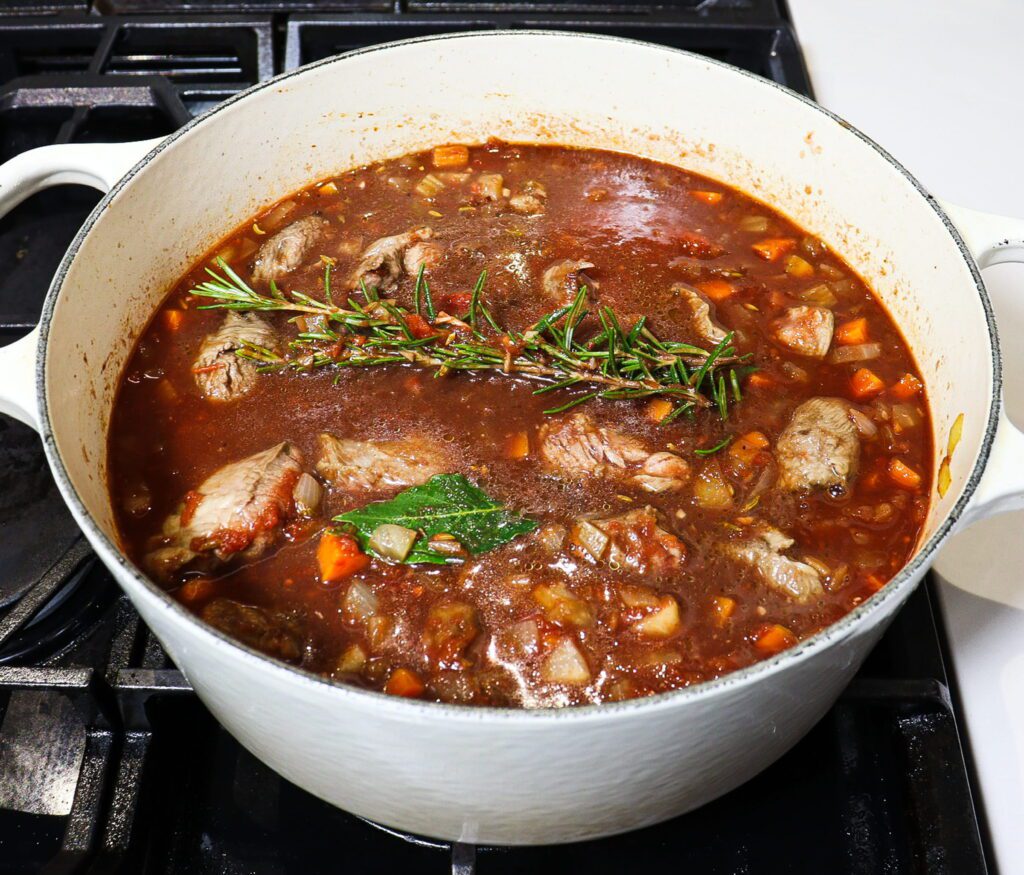
The lamb is done when it is extremely tender and can be pulled apart. To make this easier, use a slotted spoon to remove the pieces of lamb and then shred the meat. Return the lamb to the braising liquid. Taste the ragu, adding more seasoning if needed.
Cook the pasta
When the lamb is nearly finished, cook the rigatoni. Place a large pot of water on high heat and bring to a boil. Add a generous amount of salt to the water. The water should taste 'seasoned'. Add the rigatoni to the boiling water, stirring occasionally to prevent the pasta from sticking.
Serve the Lamb and Fennel Ragu
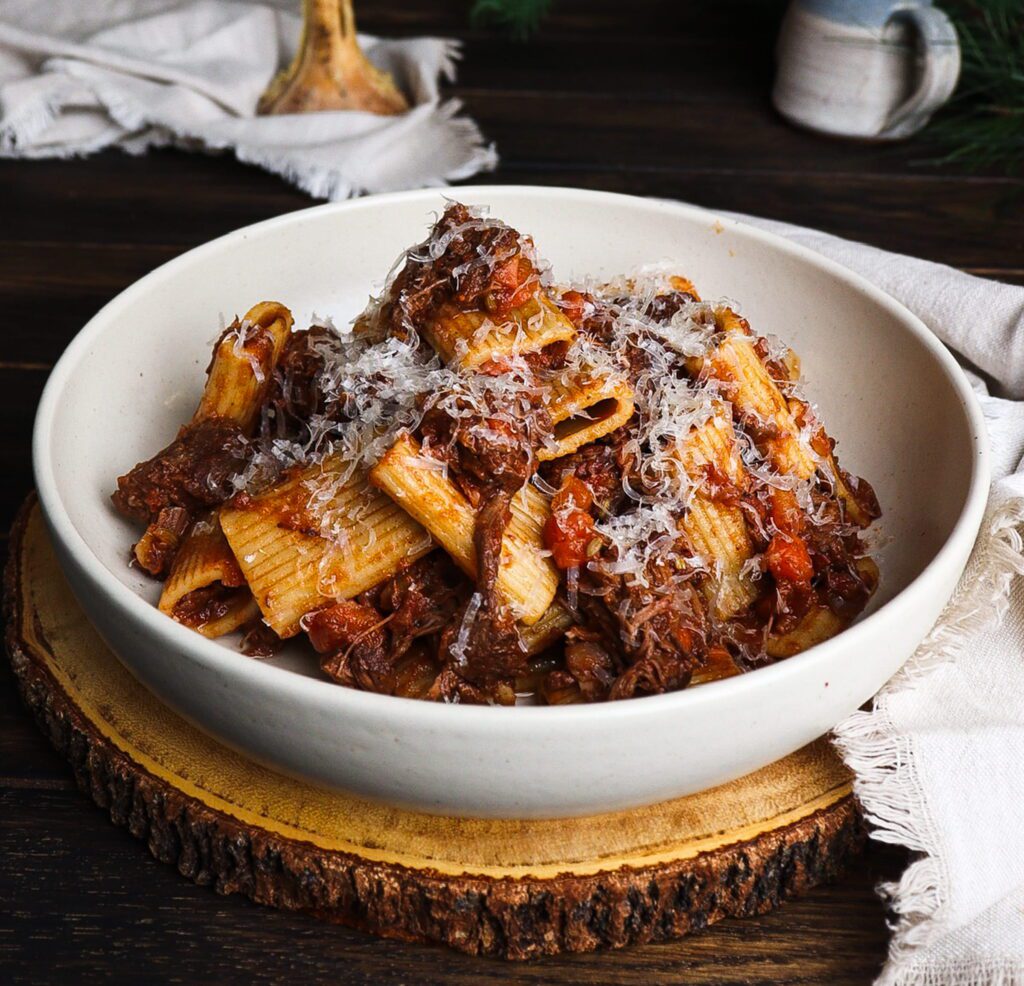
Remove the rigatoni from the heat when it is almost fully cooked but still has a bit of bite to it. The rigatoni will finish cooking in the ragu. Use a spider strainer to scoop the rigatoni into the ragu, reserving some of the pasta water. Turn the heat up to medium high and gently stir the pasta into the ragu. Allow to cook for a few minutes until the ragu thickens and begins to cling to the pasta. If the mixture looks dry, add a splash of pasta water.
When the pasta is fully cooked and the sauce has thickened, remove from the heat. Add the finely grated Parmesan and stir to combine. Serve the pasta with more grated Parmesan and enjoy!